A practical guide for primary care, urgent care, home health, telehealth, and any clinician who needs clinical-grade 12-lead ECG outside the cardiology suite.
The cardiac diagnostic gap most clinics still live with
A 60-year-old patient walks into a busy primary care clinic with chest tightness, new-onset palpitations, and shortness of breath. The clinician knows exactly what they need next: a 12-lead ECG. But the practice doesn't have one in-office. The traditional 12-lead EKG cart is too expensive, too bulky, and requires a trained technician the clinic can't justify hiring. So the patient is sent home with a cardiology referral — and waits two, three, sometimes six weeks for an appointment.
This same scenario plays out thousands of times a day across primary care, urgent care, home health, occupational medicine, telehealth, sedation dentistry, weight management, geriatrics, and rural clinics. The result is always the same: delayed cardiac diagnostics, fragmented care, missed billable services, and avoidable patient anxiety.
The good news: this gap is finally closing. A new generation of portable 12-lead EKG machines — also called mobile EKG machines, handheld 12-lead ECG devices, or smartphone 12-lead ECGs — is putting clinical-grade cardiac diagnostics into the pocket of any healthcare professional. No cart. No dedicated tech. No legacy price tag.

What is a portable 12-lead EKG machine?
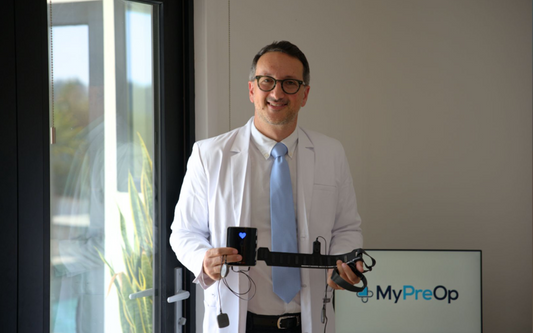
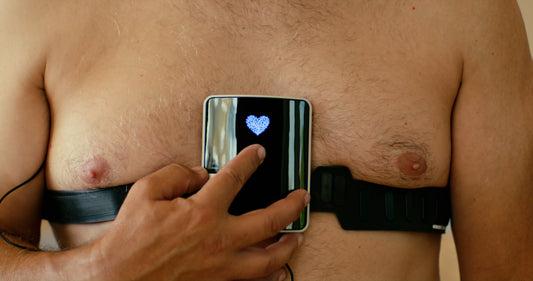
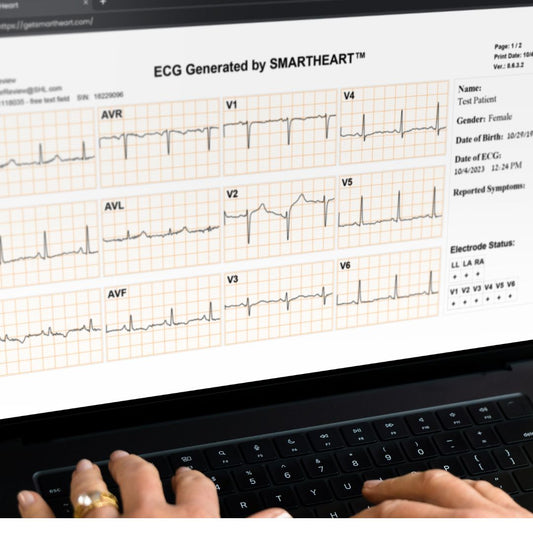
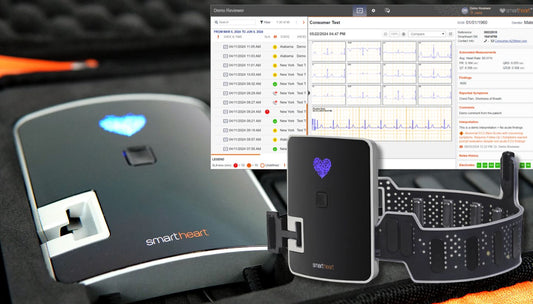
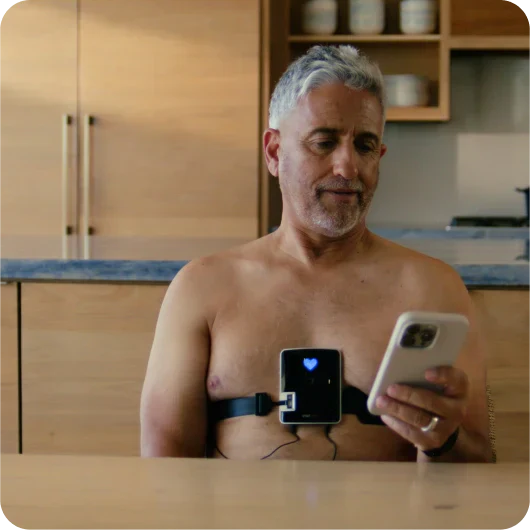
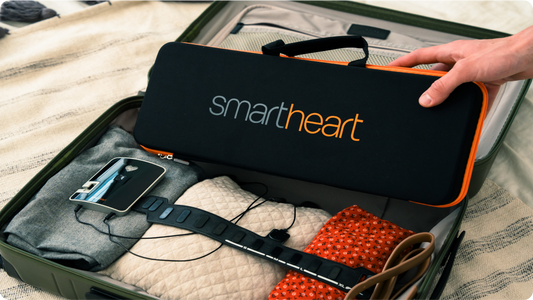
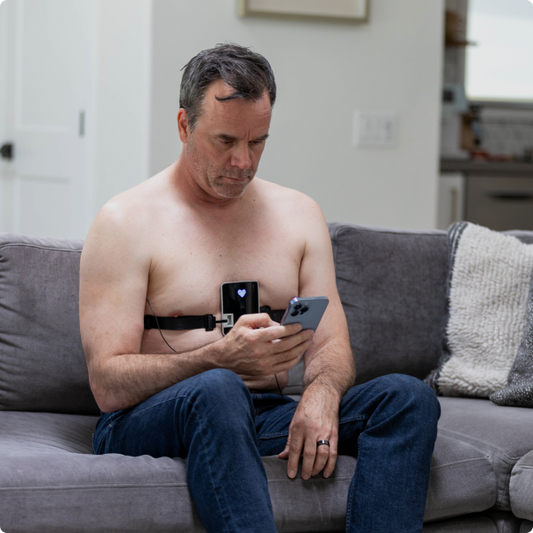
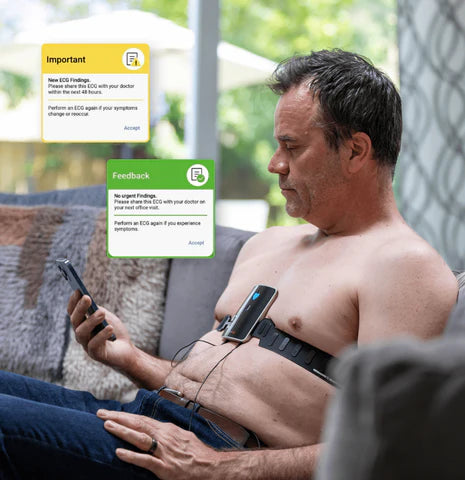
A portable 12-lead EKG (or 12-lead ECG) is a compact, often handheld medical device that captures the same twelve simultaneous electrical views of the heart as a traditional in-hospital ECG cart — but in a form factor light enough to carry in a lab coat pocket or a home-visit bag. Modern portable 12-lead EKG machines pair with a smartphone or tablet over Bluetooth, display a real-time waveform on screen, and store recordings to the cloud for review, sharing, and EHR documentation.
The key clinical distinction is the full 12-lead. Single-lead and 6-lead wearables — smartwatches, patch monitors, finger-based devices — have a role in rhythm screening, but they cannot replace a 12-lead recording for evaluating ischemia, ST-segment changes, axis, hypertrophy, bundle branch blocks, QT prolongation, or pre-procedural cardiac clearance. A portable 12-lead EKG closes that gap: hospital-grade lead coverage in a device any trained clinical staff member can operate.
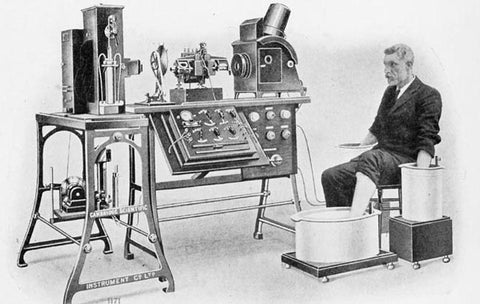
Portable 12-lead EKG vs. traditional ECG cart
- Size and mobility: Traditional carts are room-bound and require setup time. Portable 12-lead EKG devices move with the clinician — exam room to exam room, home visit to home visit, telehealth station to bedside.
- Cost of entry: Legacy 12-lead EKG carts can run $3,000–$10,000+ before service contracts, paper, and consumables. Mobile 12-lead EKG systems eliminate most of that overhead.
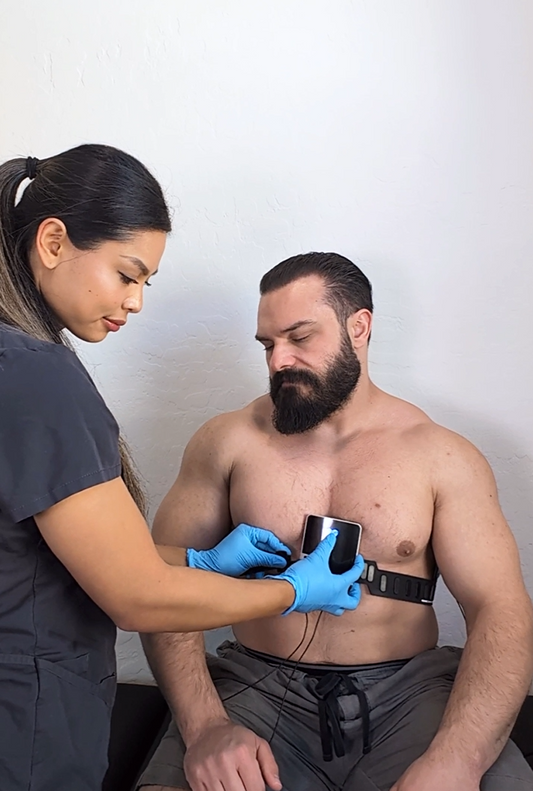
- Staffing model: A portable EKG machine designed for the modern clinic does not require a dedicated ECG technician. Any trained clinical staff member — MA, RN, NP, PA, or physician — can place the leads and capture a recording.
- Workflow: Recordings sync to the cloud, can be reviewed remotely, and integrate with the patient chart. No paper trails, no missing printouts, no manual scans.

Why HCPs are switching to mobile 12-lead EKG machines
1. Faster clinical decisions at the point of care
Cardiac symptoms — chest pain, palpitations, syncope, dyspnea — don't schedule themselves for cardiology hours. With a portable 12-lead EKG machine, the clinician evaluating the patient can capture a high-fidelity tracing in minutes and act on it immediately: reassure and continue workup, escalate to the ED, or coordinate cardiology follow-up with the actual tracing in hand.
2. Fewer unnecessary referrals — and faster ones when needed
An in-office 12-lead ECG ends a huge portion of the "is this cardiac?" guesswork. Clinically reassuring tracings reduce low-value cardiology referrals. Concerning tracings travel with the referral, helping cardiology triage faster and patients get seen sooner.
3. Captured revenue and captured patient experience
CPT 93000 (12-lead ECG with interpretation and report) is a legitimately reimbursable service that many clinics simply forfeit because they don't own the equipment. A mobile 12-lead EKG device makes this a recurring in-office service rather than an outsourced referral — and patients prefer to have it done where they already are.
4. Pre-procedural and medication-monitoring clearance, on demand
From sedation dentistry to weight-loss programs using GLP-1 medications, from occupational health to integrative medicine, more practices need baseline and follow-up ECGs as part of their standard of care. Portable 12-lead EKG machines make that screening practical instead of theoretical.
5. Cardiac care that travels — home health, telehealth, rural clinics
Home health nurses, mobile primary care providers, and rural FQHCs have always needed cardiac diagnostics in places where ECG carts never made sense. Mobile EKG machines are designed for exactly this: lightweight, battery-powered, smartphone-connected, and ready in the patient's home, the clinic parking lot, or a synchronous telehealth visit.

Where portable 12-lead EKG machines fit clinically
SmartHeart partners with HCPs across a wide range of practice settings. The patterns are consistent:
- Primary care and family medicine — baseline ECGs, palpitation workups, hypertension follow-up, pre-operative clearance.
- Urgent care — chest pain triage, atypical presentations, fast disposition decisions.
- Home health and house-call practices — bedside 12-lead ECGs for homebound and post-acute patients.
- Telehealth — synchronous or store-and-forward 12-lead recordings to support virtual cardiac visits.
- Direct primary care (DPC) and concierge practices — in-house cardiac diagnostics without inflating overhead.
- Occupational and employer health — DOT physicals, return-to-work clearance, on-site cardiac screening.
- Sedation dentistry and oral surgery — pre-procedural cardiac evaluation.
- Integrative and functional medicine — longitudinal cardiac tracking as part of a comprehensive plan.
- Geriatrics and senior care — frequent, low-friction ECGs without transporting frail patients.
- Weight management and metabolic health — baseline and ongoing cardiac monitoring during GLP-1 and other therapies.
- Psychiatry — QT-interval monitoring for patients on QT-prolonging medications.
What to look for in a portable 12-lead EKG machine
Not every "portable EKG" on the market is built for clinical use. When evaluating a mobile 12-lead EKG device for a healthcare practice, HCPs should look for:
- True 12-lead capture — twelve simultaneous leads, not a derived or reconstructed tracing.
- FDA clearance for clinical use, with documented signal quality.
- No dedicated tech required — designed for any trained clinical staff member to operate.
- Smartphone and tablet compatibility — iOS and Android, so the device fits the hardware the clinic already uses.
- Cloud storage and sharing — recordings should be retrievable, exportable as PDF, and shareable with cardiology or the EHR.
- AI-assisted interpretation as a clinician aid, never a replacement for clinical judgment.
- HIPAA-compliant infrastructure — encryption in transit and at rest, BAAs available, role-based access controls.
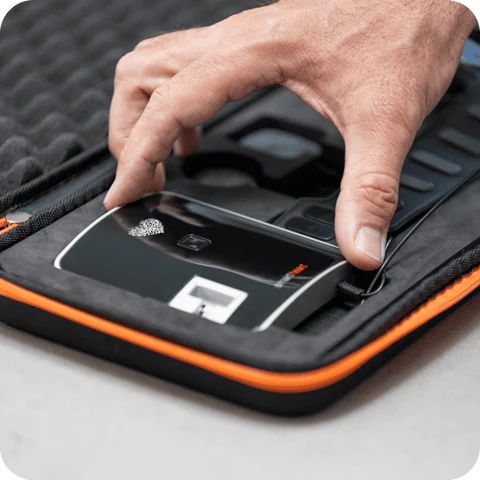
- Durable, infection-control-friendly hardware — wipeable, battery-powered, and built for repeated daily use.

SmartHeart: a portable 12-lead EKG built for HCPs
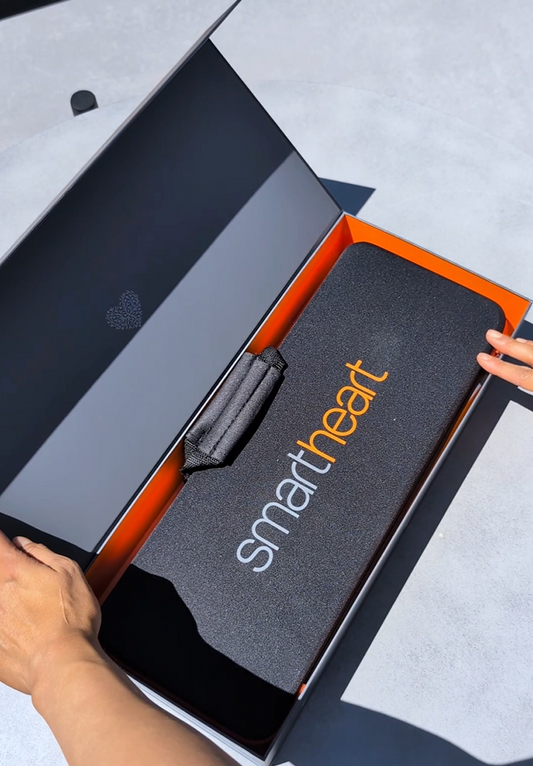
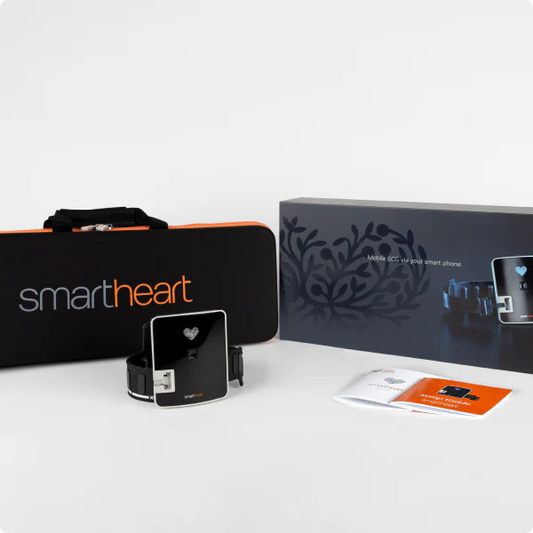
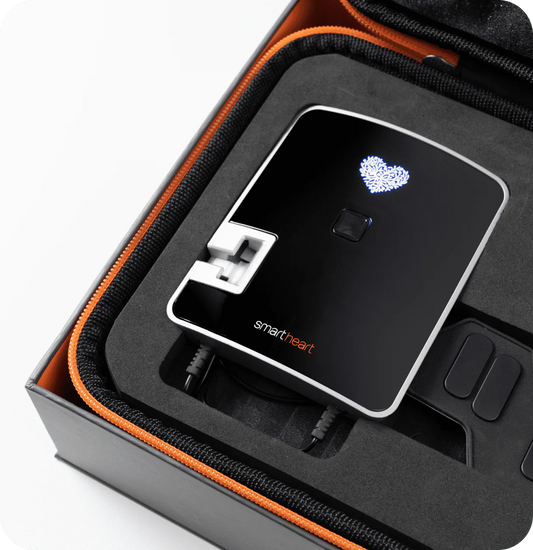
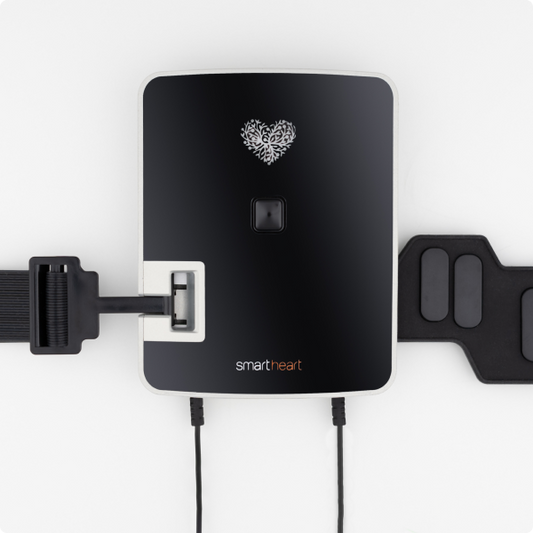
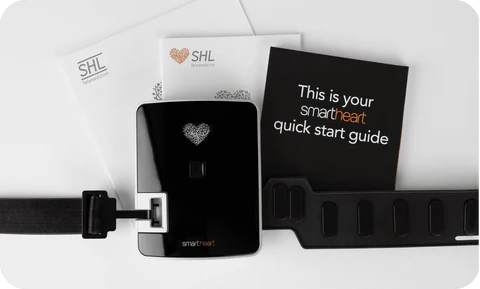
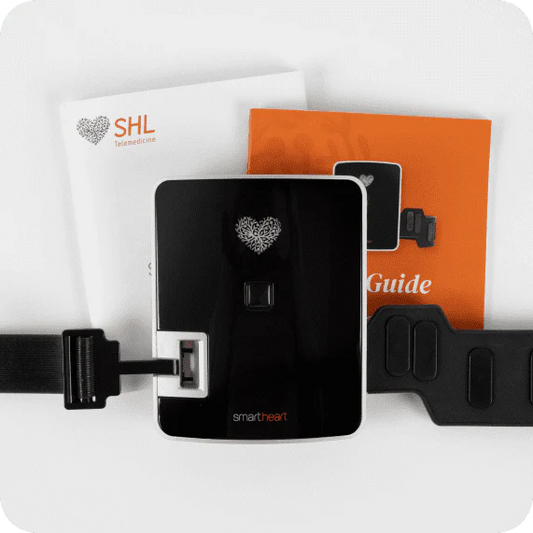
SmartHeart is an FDA-cleared, smartphone-paired portable 12-lead EKG machine designed specifically for clinicians who need clinical-grade cardiac diagnostics anywhere they see patients. It captures a full 12-lead ECG in under a minute, stores recordings securely in the cloud, and is ready for primary care, urgent care, home health, telehealth, and specialty practices that have outgrown referring every cardiac question to cardiology.
For practices, the math is straightforward: a mobile 12-lead EKG turns a missed referral into a captured visit, a delayed diagnosis into a same-day answer, and a clunky ECG cart into a device that lives in a lab coat pocket.
Frequently asked questions about portable 12-lead EKG machines
Is a portable 12-lead EKG as accurate as a traditional ECG cart?
A clinically validated, FDA-cleared portable 12-lead EKG machine captures the same twelve simultaneous leads as a hospital cart. Signal fidelity depends on lead placement and skin preparation — the same fundamentals that apply to any 12-lead ECG.
Do I need a trained ECG technician to use a mobile EKG machine?
No. Modern portable 12-lead EKG devices are designed so that any trained clinical team member — MA, RN, NP, PA, or physician — can place the leads and capture a recording, after a brief onboarding.
Can I bill CPT 93000 with a portable 12-lead EKG?
Yes, if the device produces a clinically valid 12-lead recording and the clinician documents an interpretation and report consistent with CPT 93000 requirements. Confirm coverage rules with each payer.
Does a portable 12-lead EKG integrate with my EHR?
Look for cloud-based platforms that allow PDF export of the 12-lead tracing and, ideally, direct EHR integration. SmartHeart supports clinical workflows for HCPs across primary care, urgent care, home health, telehealth, and specialty practices.
Ready to bring a portable 12-lead EKG into your practice?
If your practice is exploring a portable 12-lead EKG machine, mobile EKG device, or point-of-care ECG solution, SmartHeart's clinical team can walk through the workflow, integration, and reimbursement model that fits your setting.
Learn more about SmartHeart for Healthcare Professionals →
SmartHeart is intended for use by trained healthcare professionals. Clinical interpretation of ECG recordings is the responsibility of a licensed clinician. SmartHeart is FDA-cleared for 12-lead electrocardiogram recording.