Last updated: August 2026. This guide explains Florida's student-athlete EKG requirement under the Second Chance Act and the FHSAA EL1 ECG Screening form. It is general information for schools and healthcare providers, not medical or legal advice.
Key facts at a glance
- What changed: Florida's Second Chance Act made an electrocardiogram (ECG/EKG) part of athletic eligibility for high school athletes.
- Effective date: July 1, 2026 — in force for the 2026–27 school year.
- Who needs one: All incoming 9th-grade student-athletes, plus any student in grades 10–12 who participates in an interscholastic athletic competition — or is a candidate for a team — for the first time.
- The paperwork: The FHSAA EL1 ECG Screening form, submitted alongside the EL2 preparticipation physical.
- Look-back window: An ECG completed within two years prior to July 1 of the participation year. For 2026–27, that means an ECG on or after July 1, 2024.
- Interpretation standard: The clinician must be familiar with the current International Criteria for ECG Interpretation in Athletes.
- Typical cost: Community screening events in Florida have run roughly $20–$50 per athlete.
- Cost-based exemption: A student is exempt if their district cannot obtain a public or private partnership providing an ECG at under $50 per student.
- If a tracing is flagged: The athlete is referred for further evaluation and the supplemental EL1/2S medical eligibility form is used.
Every Florida athletic director, school health office, and sports medicine practice is now working through the same question: how do we actually get hundreds of athletes screened, documented, and cleared before the season starts? This guide covers the rule itself, the EL1 form line by line, the three realistic ways to get athletes screened, and what each option means for schools versus clinics.
What the Second Chance Act requires
Florida's Second Chance Act is named for Chance Gainer, an 18-year-old honors student and football player at Port St. Joe High School who died of sudden cardiac arrest during a 2024 game. The legislation, led by Rep. Jason Shoaf and Sen. Corey Simon, made Florida the first state to build an ECG into high school athletic eligibility at scale.
The Florida High School Athletic Association (FHSAA) implemented the law through its Sports Medicine Advisory Committee. The practical result: starting July 1, 2026, an ECG is part of the preparticipation packet for first-time high school athletes, documented on a standardized one-page form.
The rationale: a standard history-and-physical preparticipation exam is limited in its ability to surface the structural and electrical conditions most often behind sudden cardiac arrest in young athletes — conditions like hypertrophic cardiomyopathy, long QT syndrome, and Wolff-Parkinson-White. A 12-lead ECG adds a layer of detection that a stethoscope and a questionnaire cannot. Summarizing the case for the law, Chris Parenteau, supervisor of government affairs for Sarasota County Schools, told WFLA: "We know that one in 300 children have an undetected or undiagnosed heart condition and we know that sudden cardiac arrest is the number one cause of death for student athletes."
An honest note on the clinical debate
Universal ECG screening for athletes is not clinical consensus, and schools and clinics should understand that going in. The American College of Cardiology has published a statement opposing legislative mandates for universal ECG screening in competitive athletes, noting that mortality benefits have not been confirmed and that unintended harms — false positives, unnecessary downstream testing, and athletes wrongly sidelined — are likely. AHA/ACC guidance continues to recommend targeted history-and-physical screening, and both bodies emphasize that a well-rehearsed emergency action plan with AED access and CPR training is the intervention with the strongest evidence for saving lives on the field.
None of that changes your obligation: the law is in force and the EL1 is required. But it does mean two things practically. First, an emergency action plan and accessible AEDs remain the highest-value investment a school can make in athlete cardiac safety — screening supplements that, it does not replace it. Second, the quality of the ECG interpretation matters enormously, because interpretation quality is precisely where the risk of unnecessary referrals lives.
Who needs an EKG — and who doesn't
| Student | ECG required for 2026–27? |
|---|---|
| Incoming 9th grader joining any FHSAA-sanctioned sport | Yes |
| Grade 10–12 student competing in an FHSAA sport for the first time | Yes |
| Student trying out — a "candidate for an interscholastic athletic team" | Yes — the statute covers candidates, not just rostered athletes |
| Returning athlete who already competed in an FHSAA sport | Not required — strongly encouraged |
| Student with an ECG within two years prior to July 1 of the participation year | Already satisfied — document it in Section A with result documentation attached |
| Student with a documented medical reason | Exception via Form ME1 |
| Family with a religious objection allowed by law | Documented objection on the EL1 |
| Student in a district that cannot source an ECG under $50 | Exempt by statute — district-level cost carve-out |
Two details are easy to miss when sizing your population. The statute is triggered the first time a student "participates in an interscholastic athletic competition or is a candidate for an interscholastic athletic team" — so students who try out and don't make the roster are covered too. And when a family exercises the religious objection, the statute attaches a release of liability for any person or entity that would otherwise have relied on the results.
The FHSAA EL1 ECG Screening form, explained
What is the FHSAA EL1 form? The EL1 is a one-page standardized document that records that a student-athlete's ECG was completed and reviewed. It sits alongside the EL2 preparticipation physical evaluation in the athletic clearance packet. FHSAA released the medical forms, including the ECG screening forms, in February 2026 and they are available under the "Parents" tab at fhsaa.com.
Header: student information
Completed by the parent or guardian. Full name, biological sex, age, date of birth, school, grade, student ID.
Section A — parent/guardian attestation
Used when the ECG was already performed elsewhere. The parent selects one of three paths:
- ECG completed by Who We Play For, a hospital in the state of Florida, or another healthcare organization, and electronically signed by a licensed physician. The form requires the date of the normal ECG result, the name of the performing organization, and — critically — attached normal-result documentation from the health record or the email received from the provider.
- Medical exception — parent attaches Form ME1 documenting medical grounds.
- Religious objection — parent indicates an objection based on religious reasons allowed by law.
Parent signs, prints their name, and dates the form.
The attachment is not optional. A Section A with a date and an organization name but no attached result documentation is an incomplete form. If you are an athletic office collecting these, build the attachment check into your intake.
Section B — licensed practitioner attestation
Used when a licensed practitioner performs and reviews the ECG directly. The provider attests that they are licensed per Florida statute and are familiar with the International Criteria for ECG interpretation in student-athletes, then selects one of three findings:
- Normal ECG — no further evaluation needed
- Normal variant per International Criteria — no further evaluation needed
- Further evaluation by a licensed medical professional is required — an EL1/2S must be completed
The provider supplies signature, printed name, date, credentials, license number, phone, and full address. The form specifies licensure under Florida Chapters 458, 459, 460, 464.012 or 464.0123 — or equivalent.
The detail that trips people up
Complete Section A or Section B — not both. The form states it plainly: "Please complete only ONE section (Section A or Section B, as applicable)." If a clinician performed and read the ECG and signs Section B, the parent does not also fill in Section A. Keep a copy for your records either way, and submit the completed packet through your Athletic Clearance portal or to the school administrator.
What "International Criteria" actually means for your clinician
The International Criteria for ECG Interpretation in Athletes is the modern consensus standard for reading athlete ECGs. It exists because athletic hearts adapt: sinus bradycardia, early repolarization, isolated voltage criteria for left ventricular hypertrophy, and first-degree AV block are common, benign training adaptations in a fit 15-year-old that would look abnormal against general-population criteria.
Reading athlete ECGs against general-population norms produces a high false-positive rate — and every false positive becomes a cardiology referral, an echocardiogram, an anxious family, and an athlete sidelined. In the same athlete cohorts, abnormal-ECG rates fall from roughly 26% under older ESC criteria to under 6% under Seattle and International Criteria. Sensitivity trade-offs remain debated, and the ACC has flagged potentially missed diagnoses as a real concern — but the reduction in false positives is well documented. This is why the EL1 asks the practitioner to attest to familiarity with the standard rather than simply to sign off on a tracing.
Practical implication for schools: whoever reads your athletes' ECGs should be applying athlete-specific criteria. A read from a clinician unfamiliar with the standard can generate unnecessary referrals across an entire roster.
Three ways to get athletes screened
| Option | How it works | Best for | Trade-offs |
|---|---|---|---|
| 1. Send families to a community event | Nonprofits such as Who We Play For and partners like PanCare of Florida run mass screening days. Districts including Sarasota have offered ECGs at roughly $20 versus a typical $50. | Districts with an established nonprofit partner and a scheduled event window | Depends on event dates and capacity; families must register and travel; results are commonly returned by email in roughly 7–10 days; the school does not control the timeline |
| 2. Send families to their own provider | Pediatrician, family medicine, sports medicine, or urgent care performs the ECG at the physical; provider completes Section B. | Families with an established clinical relationship | Highly variable cost and availability; many practices do not have a 12-lead in the room; compliance tracking falls back on the athletic office; chasing missing forms in August |
| 3. Screen on-site at the school | The school or a partner clinic brings portable 12-lead devices to campus and screens the roster during a scheduled screening day. | Schools and districts that want control over the timeline and a single documentation trail | Requires devices, trained staff, and a qualified read; higher upfront coordination, lower per-athlete friction |
For schools: how to run an on-site EKG screening day
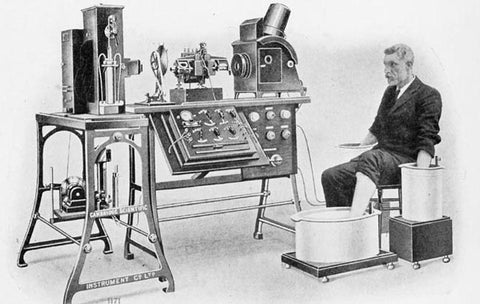
Athletic directors who have run screening days describe the same bottlenecks. A traditional cart-based EKG requires a private room, skin prep, gel, ten lead wires placed correctly, and often shaving — five to ten minutes per athlete once setup and turnover are counted. At that pace, a 300-athlete roster is a multi-day project with clinical staff you may not have.
A workable on-site screening day looks like this:
- Build the list. Pull incoming 9th graders plus first-time 10th–12th graders from your clearance portal — and remember to include tryout candidates, not just rostered athletes. Flag anyone with a valid ECG dated on or after July 1, 2024 — they only need Section A completed, with result documentation attached.
- Collect consent in advance. Send the EL1 home with the physical packet so the student information header is already filled in when the athlete arrives.
- Stack it with the EL2 physical. Running the ECG station in the same event as the preparticipation physical roughly halves the family's logistical burden and dramatically improves completion rates.
- Set up parallel stations. Throughput is a function of stations, not staff heroics. Multiple portable devices running simultaneously turn a roster into a two-hour event.
- Route the reads. Decide in advance who provides the qualified interpretation and signs Section B, and how flagged tracings are escalated the same day.
- Close the loop on referrals. For any athlete flagged for further evaluation, hand the family the EL1/2S supplemental form and a referral pathway. The EL1 itself points families to whoweplayfor.org for help accessing cardiology follow-up. Do not let this sit — it is the step that keeps athletes off the field longest.
- Check your emergency action plan while you're at it. AED placement, staff CPR certification, and a rehearsed response plan are the interventions with the strongest evidence behind them. Screening day is a natural moment to audit them.
- Archive everything. Retain copies of completed forms and tracings. Districts are already fielding questions about audit trails.
For clinics: adding athlete EKG screening as a service line
The Second Chance Act created a recurring, predictable, geographically concentrated demand for a single test — and most of the families generating that demand are currently being told to go somewhere else.
For pediatric, family medicine, sports medicine, and urgent care practices in Florida, athlete ECG screening is worth evaluating as a service line rather than a favor:
- Capture the visit you are already referring out. Every athlete you send elsewhere for an ECG is a preparticipation visit you have partially handed to a competitor.
- Standard billing pathway. A 12-lead ECG with interpretation is billed under standard CPT codes such as 93000. Confirm coverage and self-pay policy for sports-clearance indications with your payers and billing team — preparticipation screening is frequently a cash-pay service.
- Season-driven volume. Fall clearance season concentrates demand into a few weeks. Practices that can absorb walk-in and after-hours volume during that window capture a disproportionate share.
- School partnerships. A practice that can bring screening on-site to a local high school becomes the district's default provider — and the family's default practice afterward.
- Room-free workflow matters. A portable, wireless 12-lead removes the need for a dedicated EKG room, which is usually the constraint that stops small practices from offering the test at all.
Where SmartHeart fits
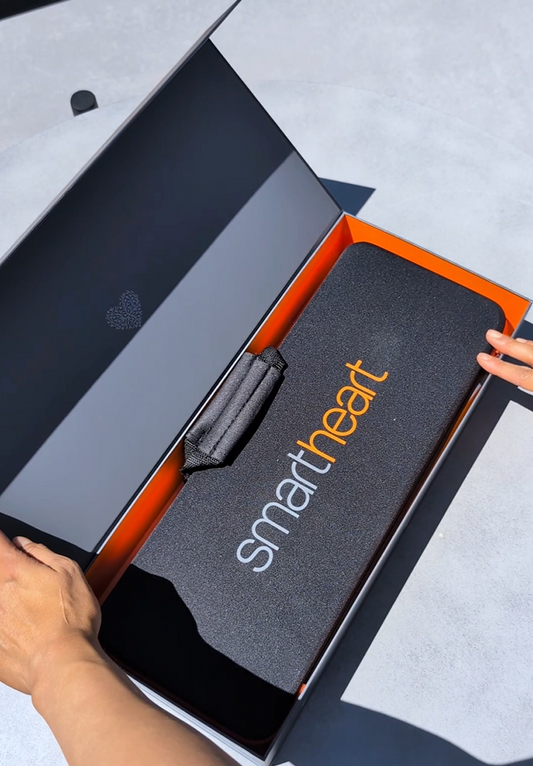
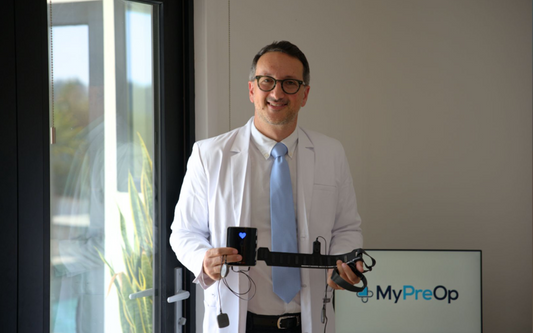
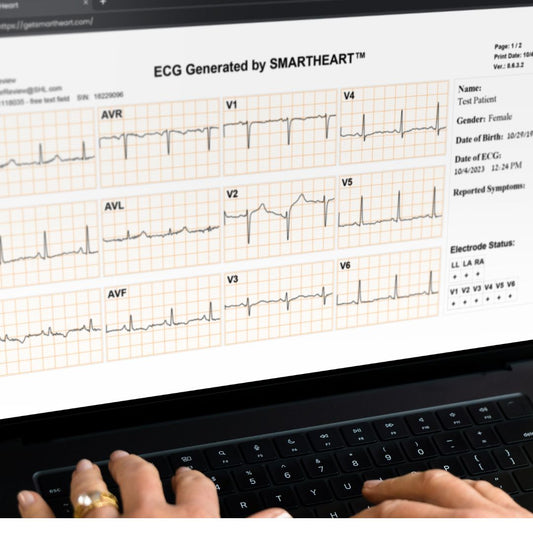
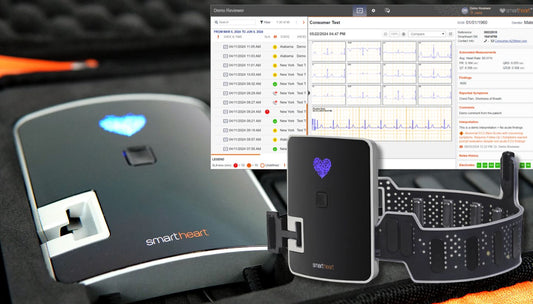
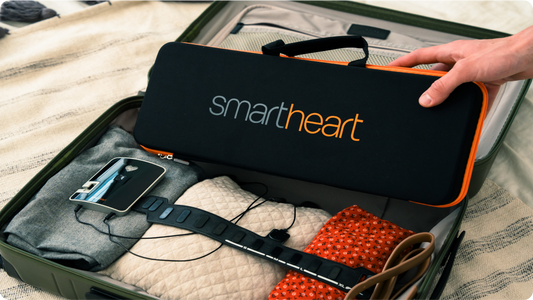
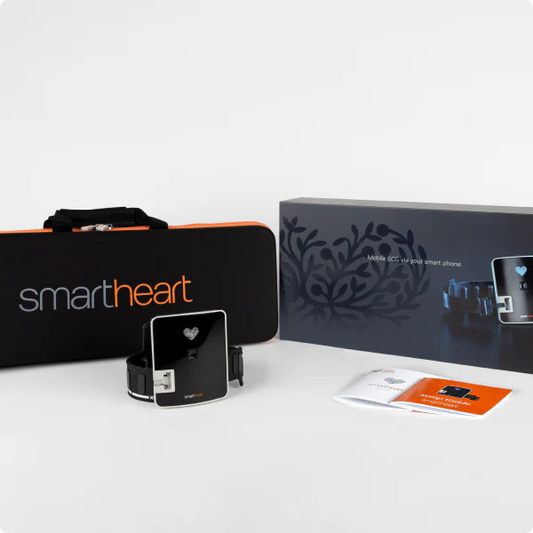
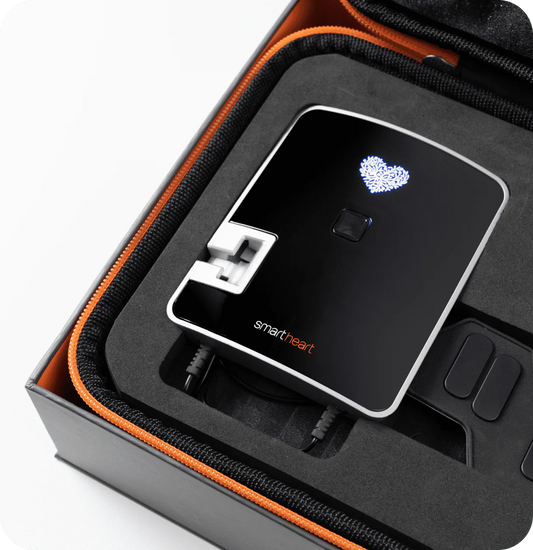
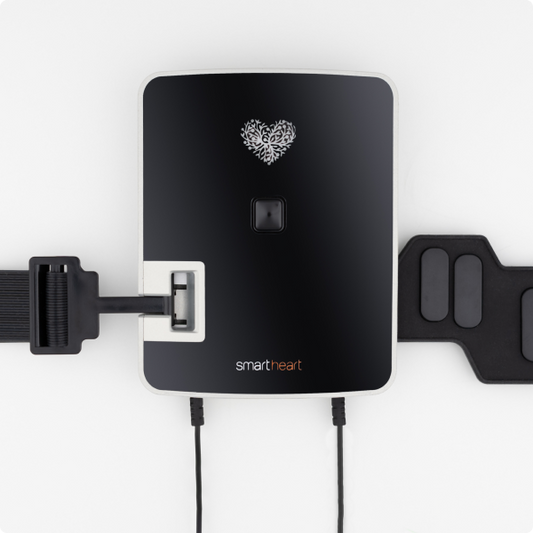
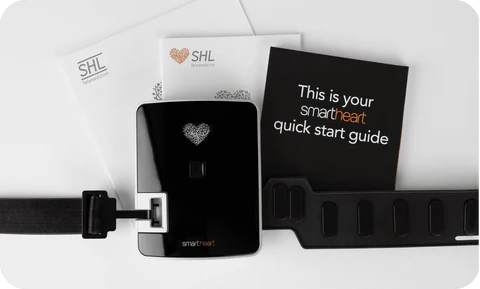
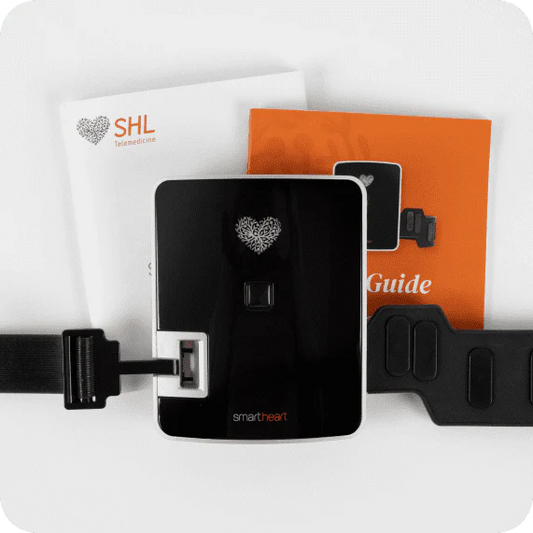
SmartHeart is a portable, wireless, FDA 510(k)-cleared 12-lead EKG built for exactly this workflow: recording diagnostic-quality tracings outside a hospital room, at volume.
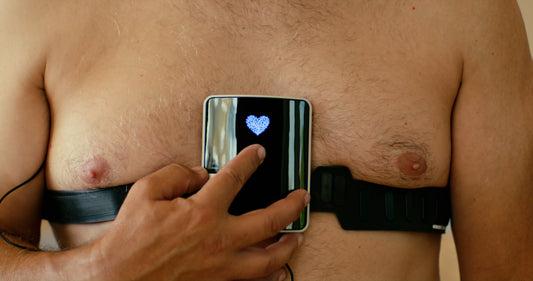
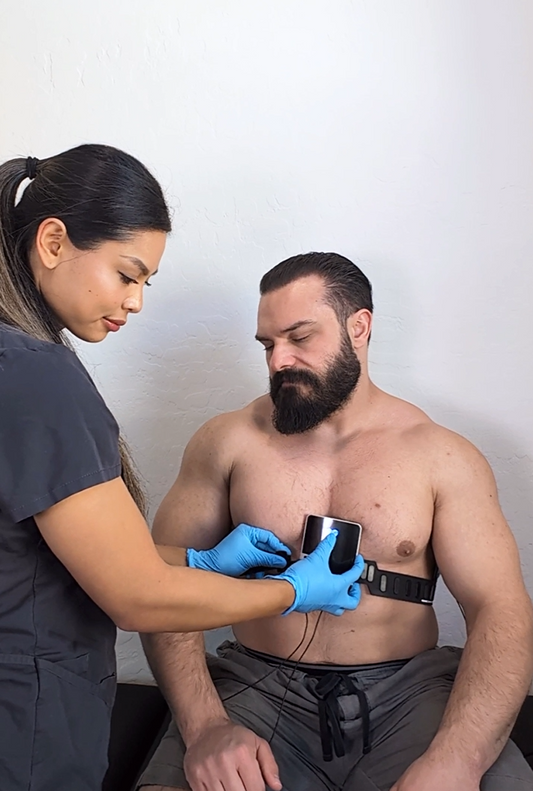
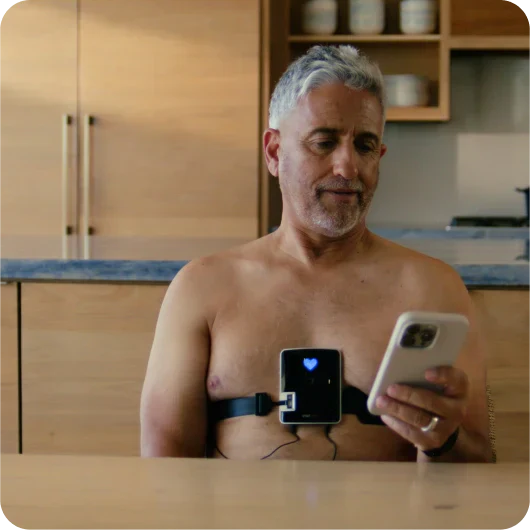
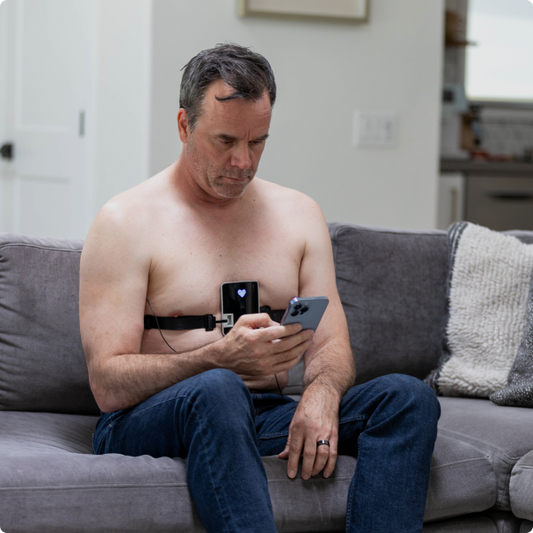
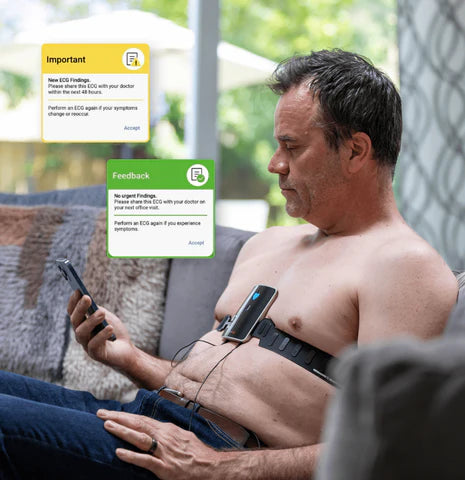
- A complete 12-lead in about 30 seconds — no gels, no lead wires, no adhesive patches, no shaving, and no dedicated EKG room.
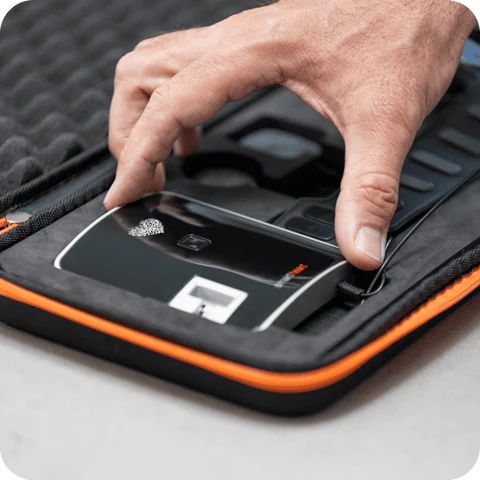
- About one pound, wireless and Bluetooth-connected to a phone or tablet, so a screening station is a table and a device.
- Designed for non-specialist operators — the app walks the user through placement step by step, so school health staff and clinic support staff can record tracings.
- Interpretation on demand — unlimited preliminary reviews, plus board-certified U.S. cardiologist interpretation available 24/7, typically returned in under 30 minutes, so flagged athletes are identified the same day rather than ten business days later.
- Hospital-grade output — correlation greater than 0.95 against standard hospital EKG machines, HIPAA compliant, with more than one million EKGs delivered on the platform.
- EL1-ready documentation — a signed, dated interpretation from a licensed practitioner is what Section B is asking for.
SmartHeart is used across CVS, Mayo Clinic, Christiana, DocGo, and other healthcare networks, and is powered by SHL Telemedicine.
Your 2026–27 compliance checklist
- Identify every incoming 9th grader and first-time 10th–12th grade athlete — including tryout candidates.
- Check for existing ECGs within the two-year look-back (on or after July 1, 2024 for this school year).
- Distribute the EL1 with the EL2 physical packet.
- Choose your screening pathway — community event, family provider, or on-site.
- Confirm the reader applies the International Criteria for athlete ECG interpretation.
- Screen and read, ideally in the same event as the physical.
- Complete Section A or Section B — never both. If Section A, attach the result documentation.
- Escalate flagged tracings for further evaluation with the EL1/2S form.
- Submit through the Athletic Clearance portal or to the school administrator.
- Retain copies of all forms and tracings.
- Audit your emergency action plan, AED access, and staff CPR training.
Frequently asked questions
Is an EKG required for high school sports in Florida?
Yes. As of July 1, 2026, under Florida's Second Chance Act, all incoming 9th-grade student-athletes — and any student in grades 10–12 who participates in an interscholastic athletic competition or is a candidate for a team for the first time — must have an ECG documented on the FHSAA EL1 ECG Screening form. Returning athletes who have already competed are strongly encouraged but not required to have one. Florida is the first state to require an ECG for high school athletic eligibility.
What is the FHSAA EL1 form?
The EL1 ECG Screening form is a one-page standardized FHSAA document that records completion of a student-athlete's ECG. It contains a student information header, a parent/guardian attestation (Section A), and a licensed practitioner attestation (Section B). It is submitted with the EL2 preparticipation physical evaluation.
How long is an EKG valid for FHSAA eligibility?
The EL1 states that an ECG completed within two years prior to July 1 of the participation year satisfies the requirement. For the 2026–27 school year that means an ECG performed on or after July 1, 2024. Document it in Section A with the result date, the name of the performing organization, and the normal-result documentation attached.
Do we complete Section A or Section B of the EL1?
Complete one, not both. Section A is for parents attesting that an ECG was already performed by a hospital or healthcare organization, or claiming a medical or religious exception. Section B is for the licensed practitioner who performed and interpreted the ECG.
How much does an EKG for student-athletes cost in Florida?
Community screening events in Florida have typically run $20–$50 per athlete. Sarasota County Schools offered screenings at $20 through a partnership with the nonprofit Who We Play For, against a typical $50 fee. Some districts, including Clay County, have offered free screenings for incoming and first-time athletes. The $50 figure is not arbitrary: the statute exempts students in any district that cannot obtain a public or private partnership providing an ECG at under $50 per student.
Who can perform and interpret the EKG?
Interpretation must come from a practitioner licensed under Florida Chapters 458, 459, 460, s. 464.012 or s. 464.0123 (or equivalent) who is trained in the evaluation and management of electrocardiograms and attests to familiarity with the current International Criteria. Neither the statute nor the EL1 specifies who may physically operate the recording device; that falls under standard scope-of-practice and delegation rules, so confirm your arrangement with your medical director or counsel. In practice, portable systems are commonly operated by trained support staff with the tracing routed to a qualified reader.
What happens if a student-athlete's EKG is flagged?
The practitioner selects "further evaluation by a licensed medical professional is required" on the EL1 and refers the athlete onward — often, though not necessarily, to a pediatric cardiologist. The family obtains the supplemental EL1/2S medical eligibility form, which the evaluating professional completes and signs to confirm clearance status before participation. The EL1 directs families to whoweplayfor.org for help accessing cardiology follow-up.
Can a school run its own on-site EKG screening day?
Yes. Schools and districts can screen athletes on campus using portable 12-lead devices, typically stacked with the EL2 physical event. The key requirements are enough devices to sustain throughput, staff trained to record tracings, and a defined pathway for qualified interpretation and same-day escalation of flagged results.
Can clinics bill insurance for a student-athlete EKG?
A 12-lead ECG with interpretation is billed under standard CPT codes such as 93000. Coverage for sports-clearance indications varies by payer, and preparticipation screening is frequently handled as a cash-pay service. Confirm policy with your payers and billing team.
How fast can a school screen an entire roster?
Throughput depends on the device and the number of stations. A traditional cart-based EKG requiring gel, ten lead wires, skin prep, and a private room typically runs five to ten minutes per athlete. A portable wireless 12-lead that records in about 30 seconds with no gels or wires allows multiple parallel stations, which is what turns a several-hundred-athlete roster into a single screening day.
Screen your roster on-site — and submit EL1 documentation with confidence
SmartHeart records hospital-grade 12-lead EKGs on-site in about 30 seconds, with board-certified cardiologist interpretation available 24/7. Built for Florida screening days.
Sources
- FHSAA — Medical Forms, Including ECG Screening Form(s) Now Available
- FHSAA Sports Medicine Advisory Committee — ECG Screening Recommendations Under the Second Chance Act
- FHSAA EL1 ECG Screening Form (PDF)
- WUSF — Florida's Second Chance Act now requires EKGs for student-athletes
- WFLA — Sarasota schools offer discounted EKGs ahead of new student athlete requirement
- Florida Senate — SB 1070 enrolled text (s. 1006.20, F.S.)
- American College of Cardiology — Statement opposing legislative mandates for universal ECG screening in competitive athletes
This article is general information for schools and healthcare providers and is not medical or legal advice. Requirements are set and updated by the FHSAA; confirm current forms and deadlines at fhsaa.com. SmartHeart is an FDA 510(k)-cleared device intended to record 12-lead electrocardiograms. Interpretation of ECG results is performed by qualified clinicians.