Last updated: August 2026. A clinical reference to the categories of ECG recording equipment and what each one can and cannot record. Written for physicians, nurse practitioners, physician assistants and practice managers. General information, not medical advice.
Key facts at a glance
- EKG and ECG are the same test. Both refer to an electrocardiogram. "EKG" comes from the German Elektrokardiogramm; "ECG" is the standard abbreviation in the medical literature. There is no clinical difference.
- An "EKG machine" is not one product category. The term covers at least five distinct device classes that answer different clinical questions.
- Lead count determines what can be seen, not accuracy. A 12-lead views the heart from twelve electrical angles. A single-lead views it from one. Both can be accurate recordings; they answer different questions.
- Only a 12-lead records the full spatial picture needed to localize ischemia, assess axis and chamber enlargement, measure the QTc reliably, or characterize a wide-complex tachycardia.
- Duration is the other axis. A resting ECG captures roughly ten seconds. Ambulatory monitors trade lead count for days or weeks of recording — which is why an intermittent arrhythmia can be missed by a resting study and caught by a patch.
- Portable does not mean reduced. Form factor and diagnostic capability are independent variables; a portable device may record a full 12-lead, and a cart-based device may be configured for fewer.
- The right question is never "which machine is best" but "what am I trying to record, over what interval, and who will interpret it."
Search for "EKG machine" and the results mix cart-based hospital systems, adhesive patch monitors, wrist wearables, and thumb-electrode handhelds — devices whose clinical roles barely overlap. This reference sorts them: what each category records, what it structurally cannot record, and how to match a device to the question in front of you.
EKG or ECG — does the distinction matter?
No. Both denote an electrocardiogram, the surface recording of the heart's electrical activity. ECG is the preferred abbreviation in journals, guidelines and international practice. EKG persists in U.S. clinical speech, partly from the German origin and partly because it is harder to confuse with EEG when spoken aloud. Equipment described as an "EKG machine" and equipment described as an "ECG machine" are the same category of device. Use whichever your team uses; the terms are interchangeable throughout this article.
The five categories of cardiac recording device
These differ along two axes — how many leads and for how long — and those two variables determine nearly everything clinically relevant.
| Category | Leads | Recording duration | Answers | Cannot answer |
|---|---|---|---|---|
| Resting 12-lead ECG | 12 | ~10 seconds | Morphology, axis, intervals, ischemic changes and their location, chamber enlargement, conduction disease, pre-excitation | Anything intermittent that isn't happening during the recording |
| Holter monitor | 2–3 (some 12) | 24–48 hours, up to 14 days | Arrhythmia burden, rate patterns across a full day, symptom–rhythm correlation via diary | Localized ischemia and detailed morphology, with reduced leads |
| Event / loop recorder | 1–3 | Weeks to years (implantable) | Infrequent, symptom-triggered events; unexplained syncope workup | Full morphologic assessment; continuous burden if patient-activated |
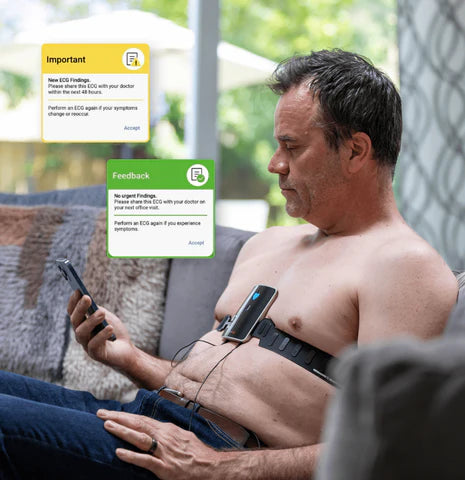
| Adhesive patch monitor | 1–2 | 7–14 days continuous | Extended continuous rhythm capture with high patient adherence | Twelve-lead morphology; ischemia localization |
| Consumer wearable / handheld | 1–6 | 30 seconds, on demand | Rhythm screening and patient-initiated capture between visits | A diagnostic 12-lead study; anything requiring precordial leads |
Note where the trade-off sits. Moving down the table buys time and gives up spatial detail. A patch monitor worn for two weeks will find paroxysmal atrial fibrillation that a ten-second resting study never had the chance to see. That same patch cannot tell you whether ST elevation is anterior or inferior, because it never records the leads that would distinguish them.
What lead count actually determines
A "lead" is not a wire. It is a vector — a specific electrical view of the heart derived from a pair or combination of electrodes. Ten electrodes produce twelve leads. Understanding this is what makes the category differences make sense.
| Configuration | Electrical views | Clinically appropriate for | Structurally cannot support |
|---|---|---|---|
| 12-lead | 6 limb (I, II, III, aVR, aVL, aVF) + 6 precordial (V1–V6) | Chest pain evaluation, pre-operative assessment, QTc measurement, syncope workup, conduction abnormalities, any study intended as a diagnostic record | — |
| 6-lead | Limb leads only | Rhythm assessment, rate, some axis information | Anterior or septal territory assessment — no precordial leads exist |
| 3-lead | Typically I, II, III | Continuous rhythm monitoring, telemetry | Morphologic and ischemic assessment |
| Single-lead | One vector, usually lead I | Rate and basic rhythm screening; AF pattern detection | Nearly everything else — axis, ischemia, chamber assessment, reliable QTc |
Directly recorded versus derived leads
One further distinction sits underneath the lead count, and it is worth asking about explicitly. A conventional 12-lead places ten electrodes and records twelve leads directly. Some systems apply fewer physical electrodes and mathematically derive the remaining leads from those they capture. Derived-lead systems can perform well and several are FDA cleared, but derivation is a reconstruction rather than a measurement, and error is best documented in the precordial leads.
When evaluating any device described as 12-lead, ask the vendor in writing: how many physical electrodes are applied, how many of the twelve leads are directly recorded versus derived, and what published validation supports the derived leads specifically.
Form factor: cart, portable, handheld
Form factor is frequently confused with capability. They are independent.
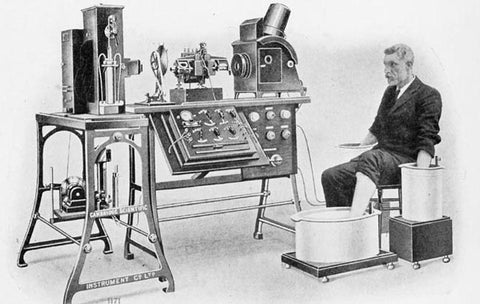
- Cart-based systems. The traditional fixed installation: a rolling cart, ten lead wires, gel, skin prep, usually a dedicated room. Full 12-lead capability with onboard interpretive software and printing. The constraint is the room and the setup time, not the signal.
- Portable 12-lead systems. Hand-carried devices that record a full diagnostic 12-lead outside a fixed room — exam room to exam room, house calls, facility rounds, screening events. Capability depends on the specific device, which is why the recorded-versus-derived question matters here in particular.
- Handheld single- and six-lead devices. Thumb-electrode or wrist-based recorders producing a short strip. Genuinely useful for rhythm screening and for patients capturing symptomatic episodes at home. Not a 12-lead study and not a substitute for one.
A portable device is not inherently less capable than a cart. A handheld six-lead is categorically different from both, regardless of how the marketing frames it.
Matching the device to the clinical question
This is the practical core of the reference. Start from what you need to record.
| Clinical question | Appropriate recording | Why |
|---|---|---|
| Chest pain or anginal equivalent in the office | Resting 12-lead | Ischemic changes require precordial and limb leads together to localize territory |
| Pre-operative or pre-sedation assessment | Resting 12-lead | Baseline morphology, intervals and conduction status are what the anesthesia or surgical team needs on file |
| Palpitations, daily or near-daily | 24–48h Holter | High event frequency means a short continuous window is likely to capture it |
| Palpitations, infrequent or unpredictable | 14-day patch or event recorder | Yield depends on recording long enough to include an episode |
| Unexplained syncope, non-diagnostic initial workup | Extended or implantable loop recorder | Events may be months apart |
| QTc check before or during a QT-prolonging medication | Resting 12-lead | Reliable interval measurement depends on multiple leads and a clean baseline |
| Patient arrives with a wearable alert | Resting 12-lead | A single-lead alert is a prompt to obtain a diagnostic study, not a study itself |
| Suspected paroxysmal AF, patient asymptomatic | Extended continuous patch | Burden quantification requires continuous recording over days |
| Screening at an occupational or community event | Portable 12-lead | Diagnostic-quality record at volume, outside a clinical room |
What only a resting 12-lead can record
Worth stating explicitly, because it is the distinction most often blurred:
- Ischemia localization. ST deviation means little without knowing which territory. Inferior changes appear in II, III and aVF; anterior and septal in V1–V4; high lateral in I and aVL. Reduced-lead devices cannot make these distinctions because the leads do not exist in the recording.
- Electrical axis and chamber assessment. Requires the limb and precordial leads together.
- Reliable QTc measurement. Convention is to measure across multiple leads; single-lead estimates are not equivalent for clinical decisions about QT-prolonging agents.
- Wide-complex tachycardia characterization. Distinguishing ventricular tachycardia from SVT with aberrancy depends on morphology criteria across precordial leads.
- Pre-excitation and conduction disease. Delta waves, bundle branch patterns and fascicular blocks are defined by their appearance across the full lead set.
Five ways devices get mis-specified
- Treating a six-lead handheld as a 12-lead substitute. It is a rhythm tool. It does not produce a diagnostic 12-lead study.
- Ordering a resting ECG for an intermittent symptom. A ten-second window cannot capture an episode that occurs twice a month. The question is duration, not lead count.
- Ordering extended monitoring when morphology is the question. The inverse error. A two-week patch will not answer an ischemia question.
- Assuming portable means reduced. Form factor and lead count are independent — ask about each separately.
- Not asking who interprets, and how fast. A recording without a documented interpretation is an incomplete clinical record. Decide the interpretation pathway before choosing hardware.
The interpretation question
Every category above produces a tracing that someone must read. Three models exist, and most practices use more than one: the treating clinician reads it directly; an algorithmic pre-read provides triage and a second look; or a cardiologist overread service reviews and signs. Automated interpretation is a useful adjunct and is not a substitute for a clinician's documented interpretation.
When evaluating any system, ask what turnaround is guaranteed, whether that figure refers to a preliminary review or a full cardiologist interpretation, whether it holds overnight and at weekends, and where the reviewing clinicians are licensed.
Where SmartHeart fits
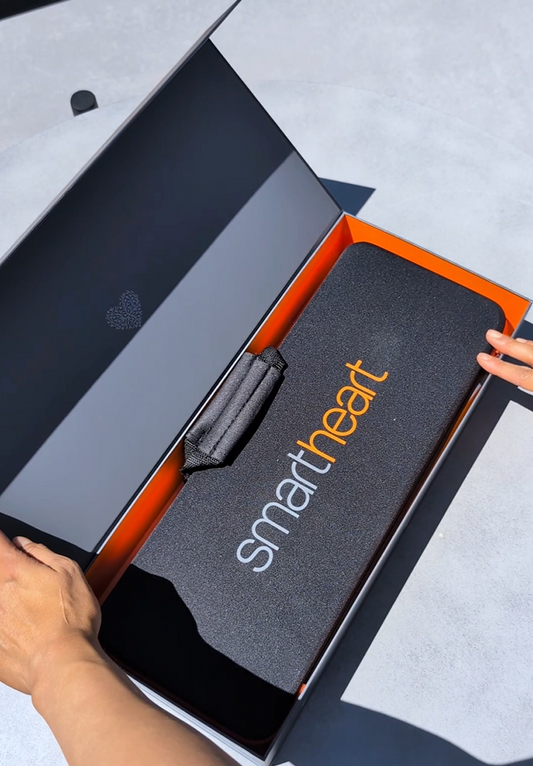
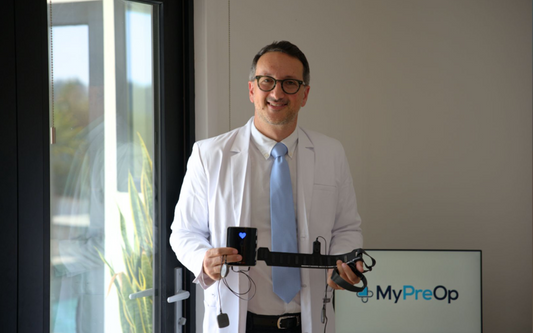
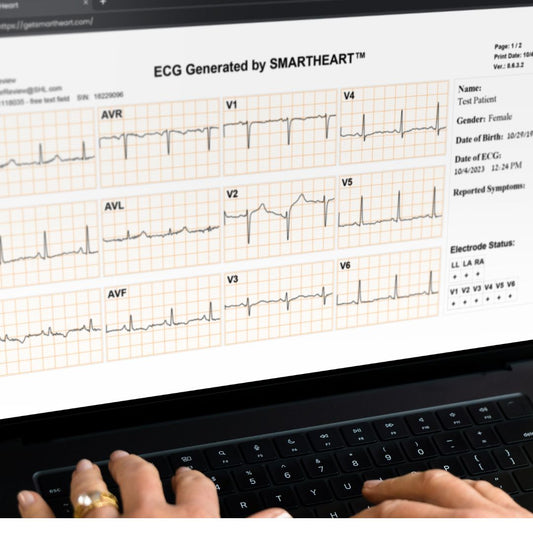
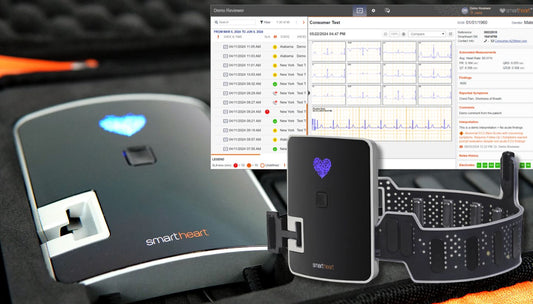
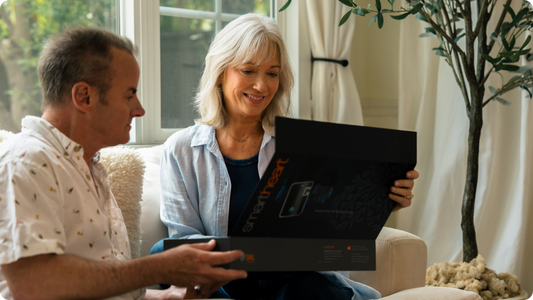
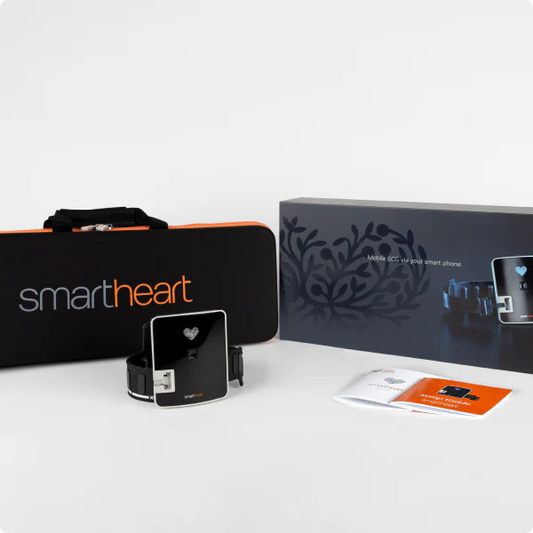
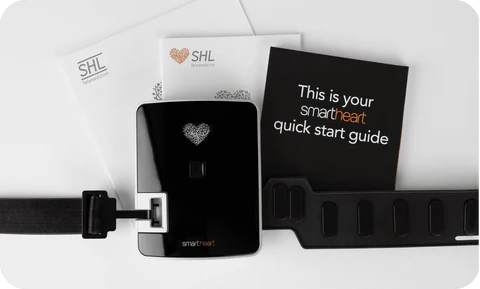
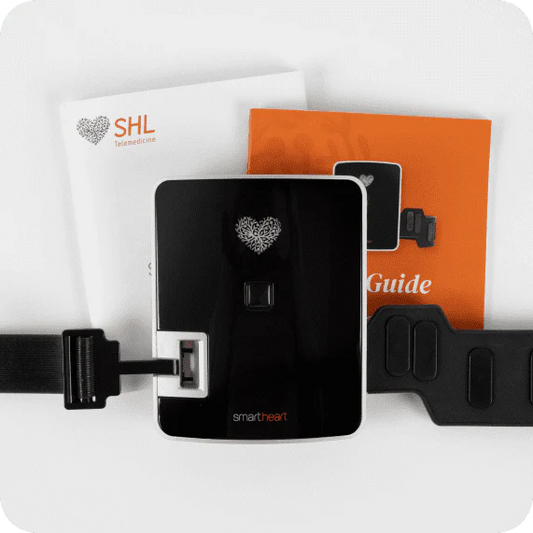
Practices that need diagnostic 12-lead capability without a dedicated ECG room sit in the portable 12-lead category. SmartHeart is built for that use case.
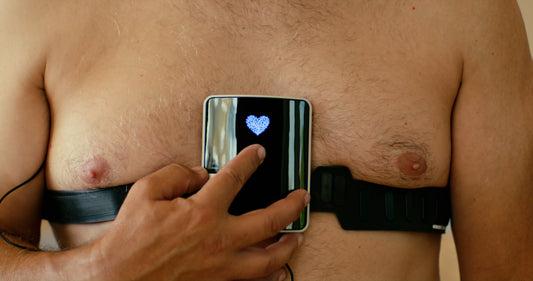
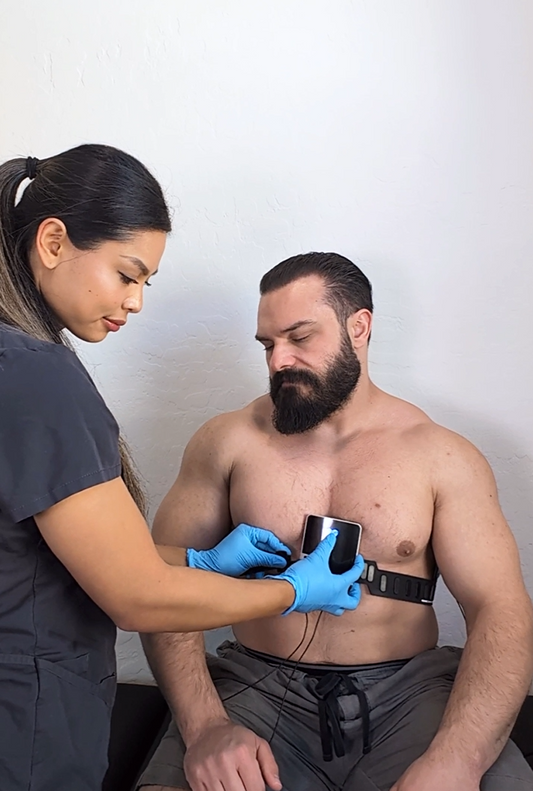
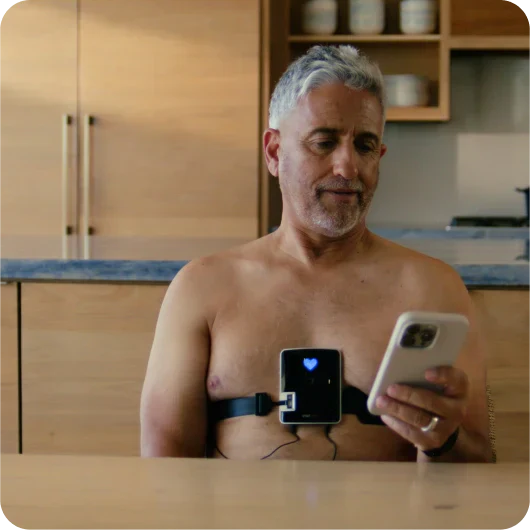
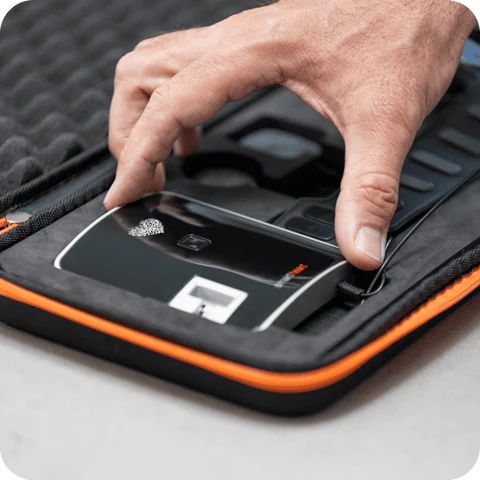
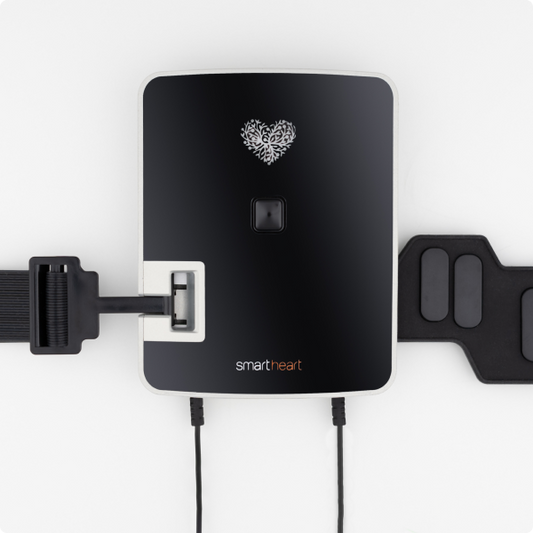
- A complete 12-lead record in about 30 seconds — no gels, no lead wires, no adhesive patches, no shaving, no dedicated room.
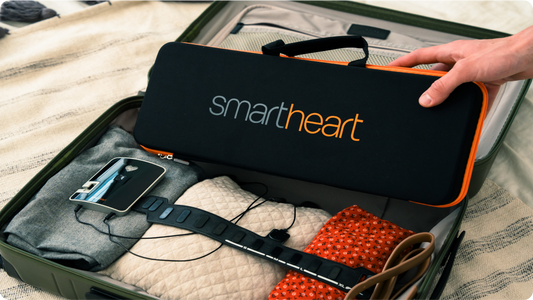
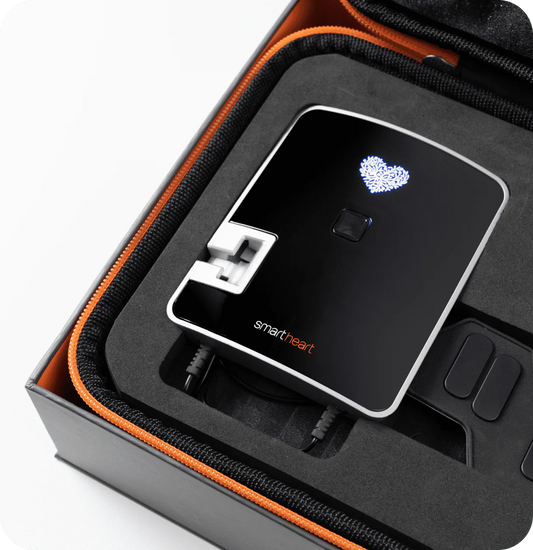
- About one pound, wireless, pairing over Bluetooth with a phone or tablet, so a recording station is a table and a device.
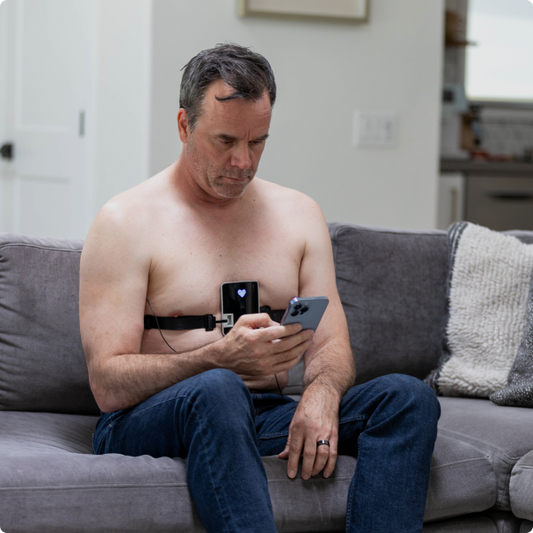
- Designed for non-specialist operators — the app guides electrode placement step by step. Confirm operator requirements against your state practice act and your own supervision policies.
- Two-tier interpretation — unlimited preliminary reviews included 24/7, plus optional full interpretation by U.S.-licensed, board-certified cardiologists, typically returned in under 30 minutes.
- Reported accuracy — SmartHeart reports greater than 0.95 correlation against standard hospital EKG machines, with more than one million EKGs recorded on the platform.
- Practice workflow — HIPAA-compliant, end-to-end encrypted, chartable PDFs, and side-by-side comparison against a patient's prior tracings. Serial comparison is often where the clinical value sits.
SmartHeart is FDA 510(k) cleared (K113514) and is powered by SHL Telemedicine.
Frequently asked questions
What is an EKG machine?
An EKG machine is a device that records the heart's electrical activity through electrodes placed on the skin, producing a tracing used to assess rate, rhythm, conduction and morphology. The term covers several distinct device classes — resting 12-lead systems, Holter and ambulatory monitors, event and loop recorders, adhesive patch monitors, and handheld or wearable single- and six-lead recorders — which differ in how many electrical views they capture and over what period.
What is the difference between an EKG and an ECG?
There is no difference. Both refer to an electrocardiogram. ECG is the standard abbreviation in medical literature and international practice; EKG derives from the German Elektrokardiogramm and remains common in U.S. clinical speech. The devices, the test and the interpretation are identical.
How many leads does a diagnostic EKG need?
Twelve. A 12-lead ECG provides six limb leads (I, II, III, aVR, aVL, aVF) and six precordial leads (V1–V6), which together allow assessment of axis, intervals, chamber size, conduction and the location of ischemic changes. Devices recording fewer leads are appropriate for rhythm assessment but cannot support territory-level interpretation, because the required electrical views are absent from the recording.
What is an EKG test and what does it show?
An electrocardiogram records the electrical signal generated by each cardiac cycle. A standard resting study captures roughly ten seconds across twelve leads and shows heart rate, rhythm, conduction intervals, evidence of prior or ongoing ischemic change, chamber enlargement patterns, and pre-excitation or conduction abnormalities. It is a snapshot: findings that are intermittent may not appear during the recording window.
What is the difference between an EKG machine and an EKG monitor?
In common usage, "machine" tends to describe a device that records a discrete diagnostic study — typically a resting 12-lead — while "monitor" describes a device that records continuously over hours or days, such as a Holter, telemetry or patch monitor. The distinction is duration and purpose rather than a formal classification, and manufacturers use the terms inconsistently. Ask about lead count and recording duration rather than relying on the label.
Is a Holter monitor better than a 12-lead ECG?
Neither is better; they answer different questions. A Holter records continuously over 24 hours to 14 days using two to three leads, which suits arrhythmia burden and symptom–rhythm correlation. A resting 12-lead records about ten seconds across twelve leads, which suits morphology, intervals and ischemic assessment. An intermittent arrhythmia may be invisible on a resting study; localized ischemic change is not assessable on a reduced-lead Holter.
Can a portable EKG machine produce a diagnostic-quality recording?
Yes, depending on the device. Portability describes form factor, not capability. The determining questions are how many leads the device records, whether those leads are directly recorded or mathematically derived from fewer electrodes, and what validation the manufacturer can supply against a standard 12-lead. Ask for that data in writing rather than inferring capability from size.
Is a wearable or smartwatch ECG the same as a 12-lead?
No. Consumer wearables and handheld recorders typically capture one to six leads for around thirty seconds. They are useful for rhythm screening and for patients capturing symptomatic episodes between visits, and a wearable alert is a reasonable prompt to obtain a diagnostic study. They cannot substitute for a 12-lead, which is what the clinical record requires for assessment beyond rate and basic rhythm.
What is a derived 12-lead ECG?
A derived or synthesized 12-lead uses fewer than the conventional ten electrodes and mathematically reconstructs the remaining leads from those it records. Several such systems are FDA cleared and perform acceptably for many purposes, but reconstruction is an approximation and error is best documented in the precordial leads. Ask any vendor how many leads are directly recorded and what validation supports the derived ones.
Which type of EKG machine does a clinic need?
Start from the clinical questions the practice actually encounters. A practice evaluating chest pain, performing pre-operative assessment or checking QTc needs resting 12-lead capability. A practice chiefly investigating intermittent palpitations needs access to extended ambulatory monitoring, usually by referral. Most outpatient practices need 12-lead capability in-house and a referral pathway for extended monitoring — and should decide the interpretation pathway before selecting hardware.
Record a diagnostic 12-lead wherever the patient is
SmartHeart records a complete 12-lead in about 30 seconds, with unlimited preliminary reviews included and board-certified cardiologist interpretation available 24/7.
Sources
- AHA/ACCF/HRS — Recommendations for the Standardization and Interpretation of the Electrocardiogram, Part I: The Electrocardiogram and Its Technology
- 2017 ISHNE-HRS expert consensus statement on ambulatory ECG and external cardiac monitoring/telemetry
- USPSTF — Cardiovascular disease risk screening with electrocardiography
- FDA 510(k) Premarket Notification database — K113514
This article is general information for healthcare professionals and is not medical advice. Device selection and clinical decisions remain the responsibility of the treating clinician. SmartHeart is an FDA 510(k)-cleared device intended to record 12-lead electrocardiograms; interpretation of ECG results is performed by qualified clinicians.