If you are looking to buy a 12-lead EKG machine for a medical practice, there are more options today than the traditional EKG carts found in hospitals.
Modern portable EKG machines can make it possible to perform a full 12-lead EKG directly in an exam room, during a home visit, at a school, in an urgent care center, or wherever the patient is being seen.
But not every ECG or EKG monitor provides the same clinical information.
For healthcare professionals, the key is finding a system that combines a true 12-lead EKG, reliable clinical-quality tracings, portability, a simple workflow, digital record management, and access to clinical interpretation when needed.
This guide explains what to look for when comparing the best portable EKG monitors and 12-lead EKG machines for clinical use.
What Is a 12-Lead EKG Machine?
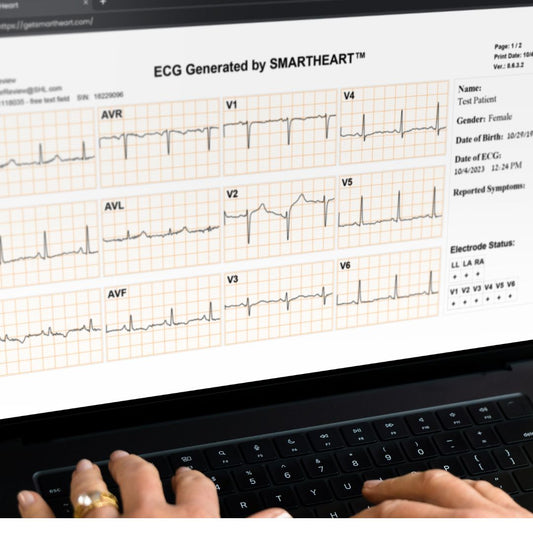
A 12-lead EKG machine records the electrical activity of the heart from 12 different electrical perspectives:
-
Leads I, II and III
-
aVR, aVL and aVF
-
Chest leads V1 through V6
Together, these views provide healthcare professionals with substantially more clinical information than a basic heart rate monitor or single-lead ECG device.
A 12-lead EKG may help clinicians evaluate patients presenting with symptoms or clinical concerns such as chest pain, palpitations, shortness of breath, syncope, rhythm abnormalities, conduction changes and other potential cardiac findings.
For this reason, when a healthcare provider searches for an EKG machine for a clinic, it is important to distinguish a true 12-lead clinical system from consumer ECG devices and basic heart rate monitors.
ECG vs. EKG: Is There a Difference?
ECG and EKG refer to the same test: an electrocardiogram.
“ECG” comes from electrocardiogram, while “EKG” originates from the German spelling Elektrokardiogramm.
Both terms are commonly used, although EKG is especially common in the United States.
So whether you are searching for an:
-
ECG monitoring system
-
EKG machine
-
heart EKG monitor
-
digital ECG machine
-
portable ECG monitor
-
clinical EKG machine
…the underlying technology may be related, but the number of leads and intended clinical use can differ significantly.
A simple ECG heart rate monitor should therefore not automatically be considered equivalent to a diagnostic 12-lead EKG machine.
What Should You Look for in a Clinical EKG Machine?
When comparing EKG systems for a medical practice, consider how the device will actually fit into your clinical workflow.
1. A Complete 12-Lead EKG
First, confirm that the device captures a complete clinical 12-lead EKG rather than a single-lead or limited-lead recording.
A full 12-lead tracing provides the standard views healthcare professionals expect from a clinical EKG examination.
This is particularly important for primary care, internal medicine, urgent care, pre-operative assessments, mobile medicine and other settings where clinicians may need more information than heart rate or rhythm alone.
2. Portability
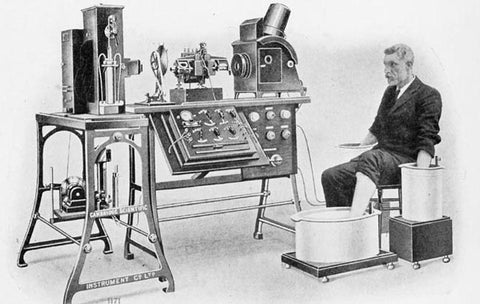
Traditional 12-lead EKG machines are often built around a cart, dedicated monitor, printer and multiple cables.
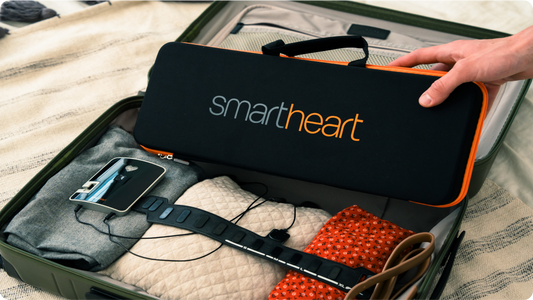
A portable 12-lead EKG machine can dramatically change how and where an EKG can be performed.
Portable systems can be particularly useful for:
-
Primary care practices
-
Urgent care centers
-
Direct primary care practices
-
Concierge medicine
-
Home visits
-
Mobile healthcare teams
-
Occupational health
-
Senior care
-
Schools and athletic screening programs
-
Multi-location medical practices
For clinicians who move between exam rooms or locations, size and portability can be just as important as the tracing itself.
3. Wireless Technology and Simplified Lead Placement
Anyone who has worked with a traditional EKG machine knows that lead wires can add complexity to setup, storage and patient preparation.
Modern systems can simplify this process.
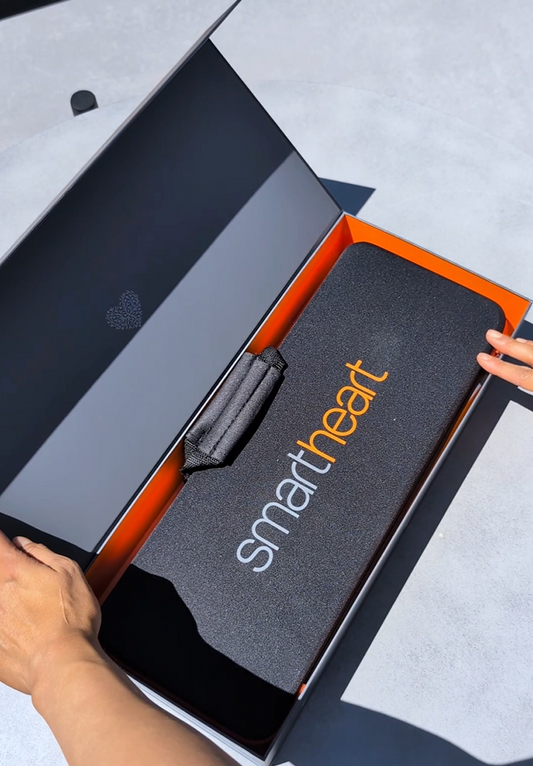
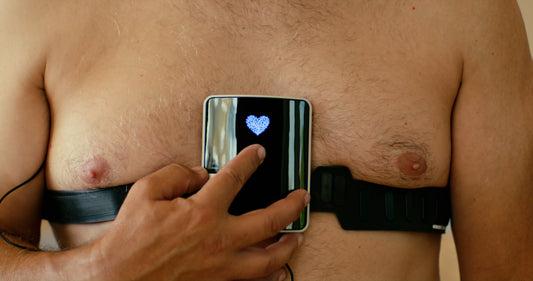
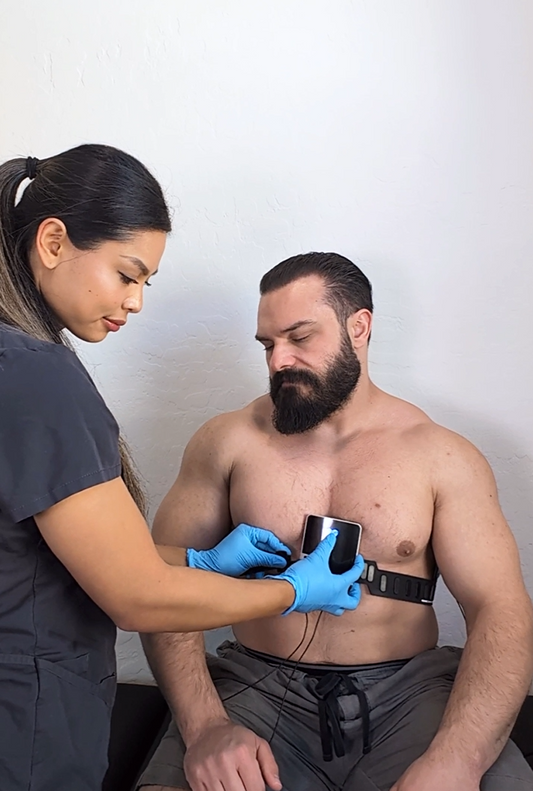
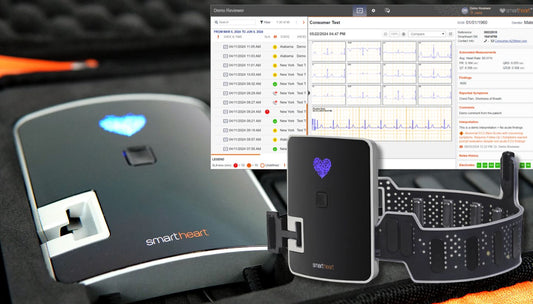
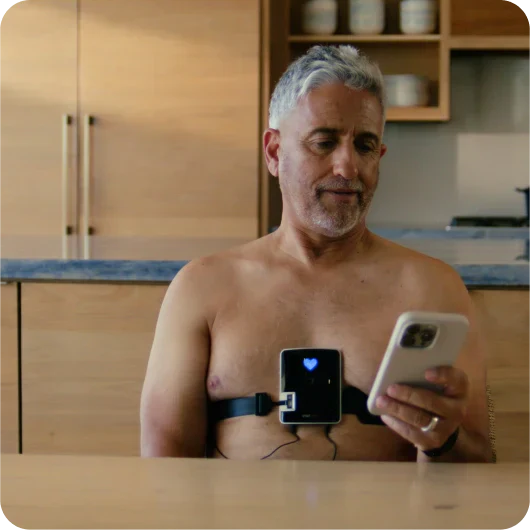
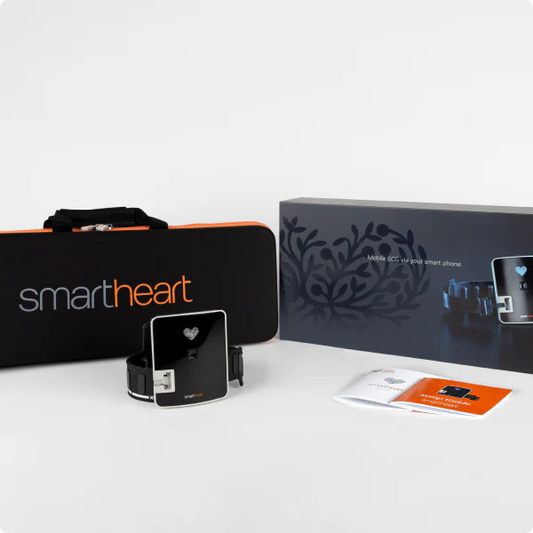
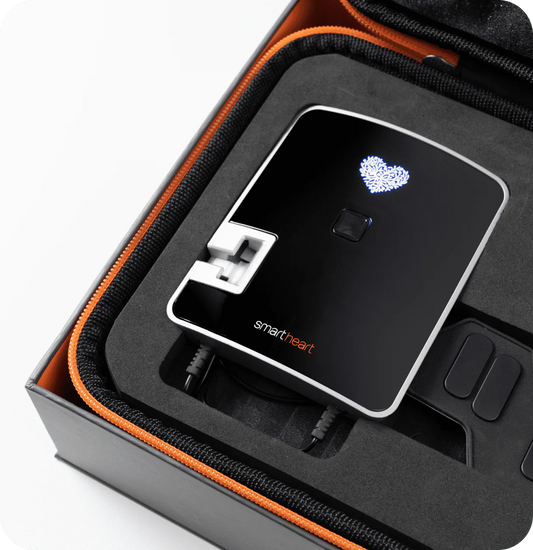
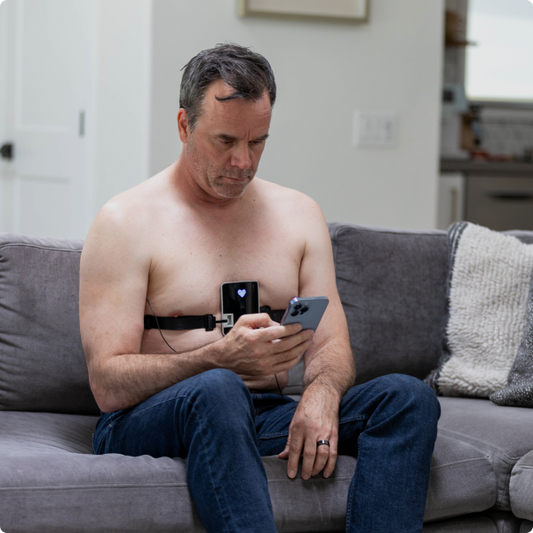
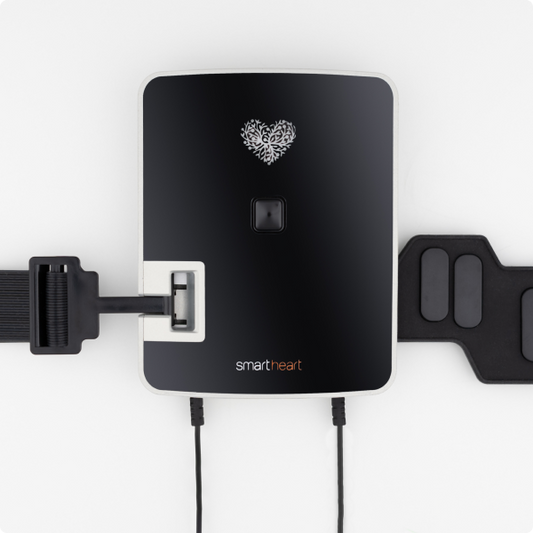
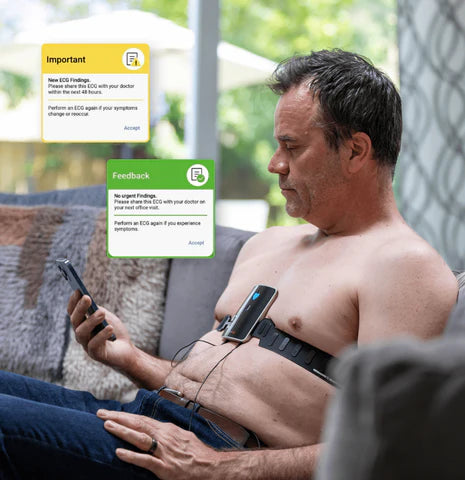
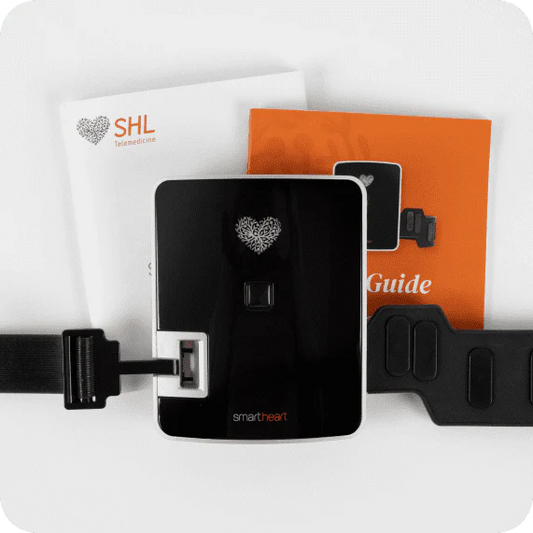
SmartHeart®, for example, combines a wearable electrode belt containing the V1–V6 chest electrodes with three integrated limb leads to complete the standard 12-lead configuration.
Instead of managing a traditional bundle of individual ECG wires and adhesive electrodes, the system is designed to make positioning faster and more repeatable.
Learn more about the SmartHeart portable 12-lead EKG for healthcare professionals.
4. Speed of Recording
In a busy medical practice, workflow matters.
If performing an EKG requires extensive preparation, a dedicated room or specially trained personnel, clinicians may hesitate to incorporate it into routine patient encounters.
A portable digital system should make it possible to move from patient preparation to recording quickly.
SmartHeart can capture a full 12-lead EKG in approximately 30 seconds, helping providers add cardiac diagnostics to the point of care without relying on a traditional EKG cart.
5. Patient Preparation
Traditional EKG workflows can sometimes involve adhesive electrodes, gels, shaving or extensive skin preparation.
That can increase setup time and create additional consumable costs.
SmartHeart is designed to operate without gels, shaving or adhesive patches, helping simplify preparation for both the provider and patient.
For practices performing multiple EKGs, seemingly small workflow improvements can become significant over time.
6. Digital EKG Records
A modern digital EKG machine should do more than simply produce a tracing.
Consider what happens after the EKG has been recorded.
A useful clinical ECG monitoring system should make it easy to:
-
Store patient EKG history
-
Review previous tracings
-
Compare EKGs over time
-
Access automatic measurements
-
Add patient symptoms and clinical notes
-
Generate a PDF
-
Share results securely
-
Maintain a digital patient record
SmartHeart automatically stores recordings in its clinical platform, allowing healthcare professionals to access current and previous EKGs through a secure physician portal.
This can be especially valuable for practices that want to move away from paper-based EKG workflows.
7. Access to Clinical Review
Buying an EKG machine solves only one part of the problem.
The next question is:
Who reviews the EKG?
For many primary care practices, urgent care centers, mobile providers and other non-cardiology settings, having rapid access to additional clinical review can be extremely valuable.
SmartHeart includes unlimited 24/7 preliminary EKG reviews with its clinical platform.
When a full physician interpretation is required, an on-demand U.S. board-certified cardiologist interpretation can also be requested, with results typically returned in 30 minutes or less.
This means the EKG device and clinical support workflow can operate as one integrated system.
Portable EKG Machine vs. Traditional EKG Machine
The right system depends on the needs of the practice.
| Feature | Traditional EKG Machine | Modern Portable 12-Lead EKG |
|---|---|---|
| Full 12-lead recording | Yes | Yes, depending on device |
| Portable | Limited | Yes |
| Dedicated cart | Often | Not necessarily |
| Multiple traditional lead wires | Usually | Can be reduced significantly |
| Digital records | Varies | Typically |
| Smartphone/tablet connectivity | Varies | Often |
| Suitable for home/mobile care | Difficult | Yes |
| Clinical interpretation service | Usually separate | Can be integrated |
For a hospital cardiology department performing high volumes of EKGs in one fixed location, a traditional cart may still make sense.
For a clinic, mobile provider or practice that wants to perform EKGs throughout its operation, portability can offer a major advantage.
What Is the Best Portable ECG Monitor for a Clinic?
There is no single EKG machine that is best for every healthcare organization.
The best portable ECG monitor for clinical use should be evaluated based on the needs of the practice.
Healthcare professionals should ask:
-
Does it record a true 12-lead EKG?
-
Is it intended and cleared for clinical use?
-
How quickly can staff perform an EKG?
-
How much patient preparation is required?
-
Is specialized EKG training required?
-
Can the device travel between rooms or locations?
-
Are EKGs stored digitally?
-
Can previous tracings be compared?
-
Can results be exported or shared?
-
Is clinical interpretation available when needed?
-
What are the ongoing costs?
-
Are consumables required for every EKG?
Looking at the complete workflow is often more useful than comparing hardware specifications alone.
How Does SmartHeart Capture a 12-Lead EKG?
SmartHeart combines a wearable electrode belt with three integrated limb leads to capture all 12 standard EKG leads without the clutter associated with a traditional wired EKG setup.
Chest leads V1–V6: Built-in electrodes in the belt align with the standard chest positions.
Limb leads I, II, III, aVR, aVL and aVF: Three integrated limb leads—positioned under each arm and at the waist—complete the configuration.
The system then generates the complete 12-lead tracing and sends the recording through the SmartHeart Pro application.
The result is an FDA-cleared portable 12-lead EKG system designed for professional clinical use.
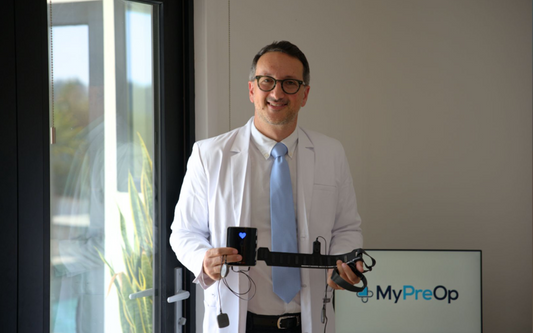
Healthcare professionals can see how SmartHeart works in a clinical setting.
What Does an EKG Machine Cost?
EKG machine cost varies considerably depending on the equipment, software, accessories, service agreements and clinical support included.
When comparing prices, practices should look beyond the initial purchase price.
Consider:
-
Device purchase or subscription price
-
Software/platform fees
-
Disposable electrodes
-
Printer paper or other consumables
-
Maintenance
-
Device replacement
-
Staff training
-
Interpretation costs
-
Technical support
-
Digital storage
-
Number of permitted users
A lower-priced EKG machine may not necessarily represent the lowest total cost of ownership.
Similarly, a system that costs more initially may reduce consumables, staff time or other operational expenses.
SmartHeart offers healthcare professionals both subscription and device-purchase options, allowing practices to select a model based on their expected usage and operational needs.
You can view current SmartHeart options for healthcare professionals here.
Who Can Benefit From a Portable 12-Lead EKG Machine?
Portable clinical EKG systems can be useful wherever healthcare professionals need access to cardiac diagnostics without sending every patient to a separate facility.
Primary Care and Family Medicine
Perform EKGs during routine examinations, symptom evaluations, pre-operative assessments and other appropriate clinical encounters without requiring the patient to leave the practice.
Urgent Care
A portable EKG can support rapid evaluation when patients present with symptoms such as chest pain, palpitations, syncope or shortness of breath.
Direct Primary Care and Concierge Medicine
A small portable EKG system can travel with the provider, making 12-lead EKG capability available during home visits as well as in the clinic.
Mobile and Home Healthcare
Traditional EKG carts were designed for fixed clinical environments. Portable systems allow healthcare professionals to bring a 12-lead EKG directly to the patient.
Occupational Health
Portable EKG technology can support on-site examinations, cardiac screening programs and multi-location healthcare operations.
Senior Care
Bringing the EKG to the patient can be particularly valuable when transportation to another medical facility is difficult.
Is a Portable EKG Machine the Same as a Heart Rate Monitor?
No.
A heart rate monitor primarily measures how quickly the heart is beating.
Some wearable devices also produce a single-lead ECG that can provide information about cardiac rhythm.
A 12-lead EKG machine, however, records the heart's electrical activity from 12 standard perspectives and is designed to provide substantially more clinical information.
Healthcare professionals looking for a heart EKG monitor for diagnostic use should therefore confirm exactly how many leads the device records and what the device is cleared and intended to do.
Can a Portable EKG Machine Replace a Traditional EKG Cart?
For many outpatient and mobile applications, a portable 12-lead system can provide an alternative to a traditional EKG cart.
The decision depends on the practice's clinical requirements, patient volume, workflow and existing infrastructure.
The important distinction is not simply whether a device is portable.
It is whether the system can provide the clinical-quality 12-lead tracing, workflow, record management and professional support required by the healthcare organization.
What Should You Know Before You Buy a 12-Lead EKG Machine?
Before purchasing an EKG machine for your clinic, evaluate the complete clinical workflow rather than looking at hardware alone.
A good system should make it easier to:
-
Perform a full 12-lead EKG when clinically appropriate
-
Capture recordings quickly
-
Reduce cumbersome setup
-
Operate across multiple locations
-
Store EKGs digitally
-
Compare previous recordings
-
Share reports securely
-
Access clinical review when required
The goal is not simply to own an EKG machine.
The goal is to make 12-lead cardiac diagnostics practical at the point of care.
A Portable 12-Lead EKG Designed for Modern Healthcare
SmartHeart® was designed to bring hospital-grade 12-lead EKG capability beyond the traditional EKG room.
The portable system connects with smartphones and tablets, records a complete 12-lead EKG in approximately 30 seconds, stores recordings digitally and provides access to 24/7 preliminary EKG review.
For practices that require additional support, cardiologist interpretation is available on demand.
Whether you operate a primary care office, urgent care center, mobile medical service, DPC practice, occupational health program or another healthcare setting, SmartHeart makes it possible to bring the EKG to the patient rather than sending the patient to the EKG.